Free shipping on all orders over $100.
Maison Pastorale I dining room wall art styled in a collected interior
The Journal · House of Sun Editions

Dining Room Wall Art: How to Choose Art for Rooms Made for Gathering

A considered guide to scale, subject, color and placement - and to choosing art that gives a dining room atmosphere before the table is even set.

Shop Maison Pastorale I

Dining room wall art shapes the mood of a room designed for more than one kind of moment. It is present at hurried breakfasts, long Sunday lunches, quiet evenings and tables filled with guests. Unlike art chosen for a corridor that is passed through quickly, artwork in a dining room is experienced at length and from a seated position. It becomes part of the conversation.

This makes the choice both practical and emotional. The right work needs enough presence to hold its own beside a table, chairs, lighting and serving pieces, yet it should not make the room feel staged. It may echo the pleasures of gathering through flowers, fruit or a laid table; it may open the wall with a landscape; or it may introduce an unexpected portrait, equestrian scene or abstract gesture.

The most memorable dining rooms are rarely built around perfect coordination. They are composed through relationships: the width of a canvas against a sideboard, the warmth of a painted sky beside candlelight, the green of a landscape answering foliage on the table, or the dark ground of a still life giving pale walls a point of gravity.

This guide explains how to choose wall art for a dining room through subject, scale, sightline, color and atmosphere. The aim is not simply to fill an empty wall, but to select a work that continues to reward attention long after the table has been cleared.

A person smoothing a linen tablecloth in a timeless European dining room
The dining room is experienced through rituals as much as decoration. Linen, light, art and useful objects all contribute to its atmosphere.
01 · A room experienced slowly

Why Dining Room Wall Art Matters

A dining room asks us to remain. We sit lower than we stand, look across rather than straight ahead and notice details repeatedly over the course of a meal. For that reason, art in this room can be more layered, more nuanced and even more mysterious than art chosen for a fast-moving space.

Artwork also gives the room a life beyond formal occasions. When the table is bare, a compelling picture prevents the dining area from feeling vacant or purely functional. It creates a destination within an open-plan home and gives an enclosed dining room an identity of its own.

The strongest choice does not need to depict food. What matters is whether the image contributes a quality the room needs: warmth, appetite, distance, rhythm, intimacy or a sense of occasion. Begin with that desired feeling before choosing a genre.

A dining room should feel complete when no one is seated there, and more alive when people arrive. Art helps it do both.
02 · The emotional brief

Begin with Atmosphere, Not a Color Match

It is tempting to begin with the upholstery or wall paint and search for artwork in the same palette. Color matters, but exact matching often produces a room that feels assembled all at once. A more enduring approach is to define the atmosphere first.

For a room that feels intimate

Look for a dark ground, close composition or low evening light. Dutch still lifes, shadowed florals and small landscapes with concentrated color invite the eye inward. They are especially effective in dining rooms used after sunset, where candlelight and shaded lamps reveal their depth gradually.

For a room that feels generous

Choose abundance: an overflowing bouquet, a wide pastoral scene, a table gathered with fruit or a composition with several points of interest. Generosity is not the same as visual noise; the work should still have a clear anchor and a rhythm the eye can follow.

For a room that feels calm

Seek open space, restrained contrast and a stable horizon. A single vessel, a spare botanical study or a quiet landscape can balance patterned chairs, shelves of objects or an expressive pendant light.

For a room that feels spirited

Allow movement and surprise. A vivid floral, an equestrian scene, a loose brushstroke or an unexpected note of orange can keep a formal table from becoming severe. The artwork can be the element that gives permission for the room to feel less perfect and more personal.

03 · Subject and appetite

The Best Wall Art Subjects for a Dining Room

No subject belongs exclusively to the dining room, but certain genres respond particularly well to gathering, ritual and the table. The right one depends on whether you want the room to feel abundant, expansive, formal, relaxed or unexpected.

Still life

Fruit, flowers, glassware and vessels connect naturally to hospitality. Dark examples bring gravity; lighter painterly arrangements feel relaxed and generous.

Landscape

A landscape extends the wall and offers a visual destination. It is valuable in narrow rooms or dining areas without a garden view.

Botanical art

Flowers and foliage introduce season and movement. They can soften formal furniture without making the room feel overly delicate.

Portraiture

A portrait creates personality and a sense of inherited life. Choose a gaze and scale that feel companionable rather than watchful from the table.

Equestrian art

Horses, riders and countryside scenes bring motion and history. They suit dining rooms shaped by wood, linen, leather and collected objects.

Abstract work

Color, line and gesture can add energy without prescribing a narrative. This is effective when architecture and furniture already carry traditional detail.

04 · The art of the table

Why Still Life Belongs in the Dining Room

Still life turns ordinary objects into subjects worthy of sustained attention. A lemon peel becomes a line through the composition; silver catches a small field of light; glass appears fragile beside fruit, bread or flowers. The genre asks us to look slowly at the same materials that accompany daily rituals.

This does not make still life an obvious or literal dining room choice. Its power lies in tension. Seventeenth-century banquet pictures often combine pleasure with reminders of time: a broken glass, a half-peeled fruit, a watch or an overturned vessel. The table is abundant, but the moment is passing.

In an interior, that visual richness rewards repeated looking. A horizontal still life can hold the wall above a sideboard, while a smaller vertical work may sit between windows or join a salon-style grouping. Rather than matching the food shown to the room, respond to the mood, light and balance of the composition.

Still Life with Oysters, a Silver Tazza, and Glassware by Willem Claesz Heda, 1635
Still Life with Oysters, a Silver Tazza, and Glassware, Willem Claesz Heda, 1635. The Metropolitan Museum of Art. Public Domain. View the museum record.
Blush Bouquet I floral canvas print for an elegant dining room
A softer interpretation

Blush Bouquet I

For a dining room that needs warmth rather than drama, a painterly bouquet offers abundance with a lighter hand. Blush pink, cream and muted green can soften dark timber, complement aged brass and bring life to quiet plaster or pale walls.

The composition is particularly suited to rooms used throughout the day. Its floral subject feels generous at the table, while the expressive handling keeps it from becoming formal or overly coordinated.

Shop Blush Bouquet I
Still life of pears, a ceramic bowl and folded linen on a dining table
Simple objects can establish the material language of a dining room: fruit, handmade ceramic and linen connect art to the rituals of the table without becoming thematic.
Living with still life

Let Objects Guide the Palette

A still life offers more usable color than first appears. Beyond flowers or fruit, notice the supporting neutrals: stone, linen, timber, ceramic glaze and shadow. These quieter tones often create the most sophisticated links to the room.

Instead of repeating every hue, select one relationship. A muted green in the painting might be answered by a glazed vessel. A warm cream can reappear in linen. A dark burgundy may connect to a painted wall or the leather of a chair. The repetition should be subtle enough to be discovered rather than announced.

Texture matters as much as color. Painterly surfaces sit beautifully beside old wood and hand-thrown pottery because each shows evidence of making. This shared irregularity is often what allows a new canvas print to feel at home among older objects.

05 · A view beyond the room

Use Landscape Wall Art to Create Depth

Dining rooms often contain substantial horizontal forms: the table, sideboard, chair backs and sometimes wall panelling. A landscape naturally responds to this architecture through its horizon, but the best relationship is more than a shared shape. A landscape creates psychological distance within a room where people sit close together.

Pastoral scenes feel calm and hospitable. Woodland views bring enclosure and depth. A garden or architectural landscape can lend a sense of travel and remembered place. In an open-plan dining area, a landscape can also establish a visual pause between the dining zone and a busier kitchen or sitting room.

Pay attention to where the composition leads. A path, river or opening in the trees pulls the gaze inward. If the artwork hangs beside a doorway, orienting that movement toward the room can feel more settled. Above a sideboard, a balanced horizon with interest on both sides usually holds the furniture more convincingly.

A landscape does not need to match the view outside. Its purpose may be to offer the room the season, weather or distance it does not already possess.

A pastoral focal point

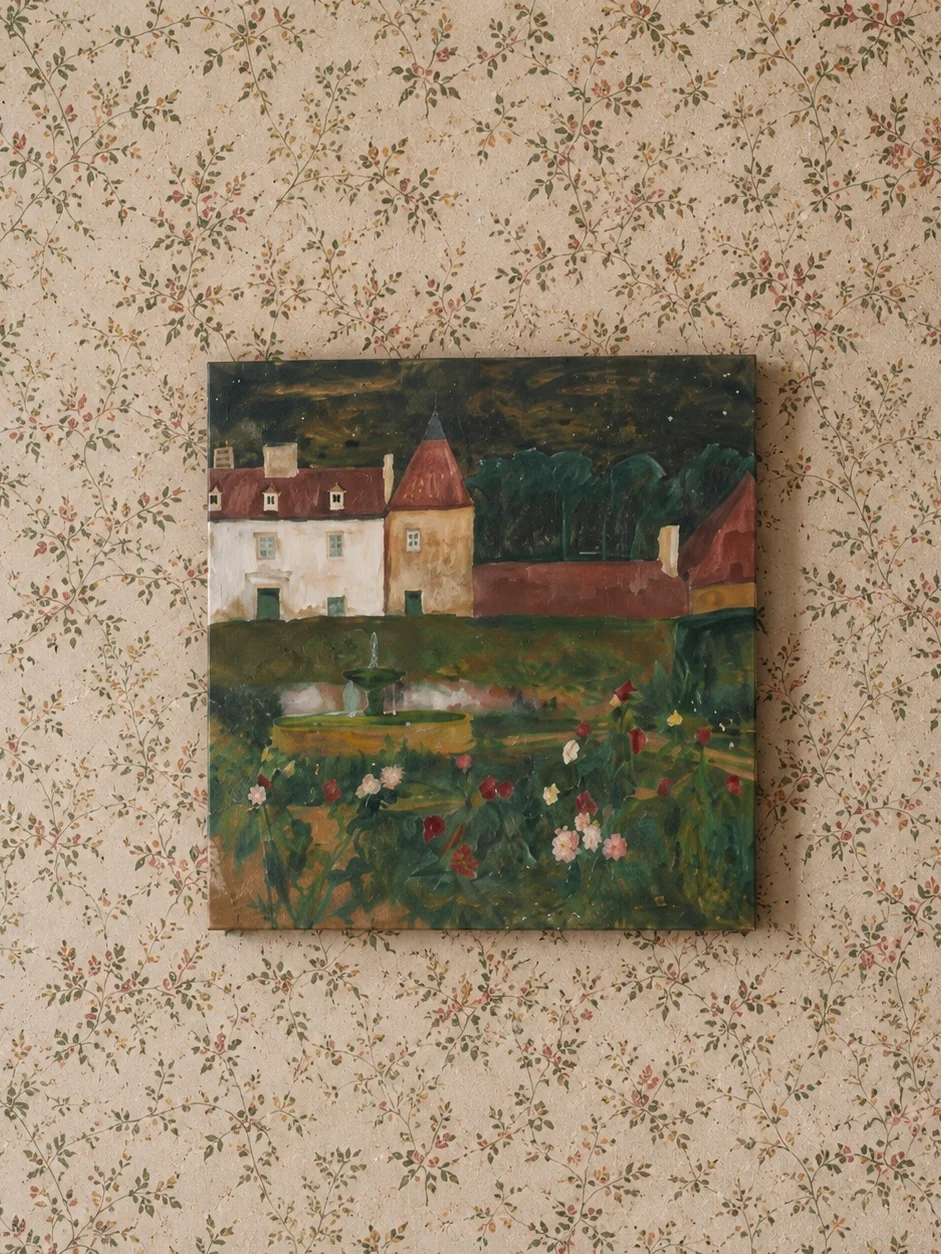
Maison du Lac II

A garden landscape can give a dining room the feeling of looking toward another place. The square format is especially useful above a compact sideboard, between architectural features or on a wall where a wide horizontal canvas would feel predictable.

Its deep greens and warm earth notes respond naturally to dark wood, cream linen and soft evening light. Use it as the room's principal view, then keep nearby objects low enough that the composition can breathe.

Shop Maison du Lac II
Maison du Lac II landscape canvas print styled for a collected dining room

Continue directly with Part Two below.

06 · The architecture of scale

How Large Should Dining Room Wall Art Be?

Scale is the most common reason a promising artwork feels unsettled once it reaches the wall. Dining rooms contain furniture with strong visual weight. A picture that looked substantial on its own can appear small above a long sideboard or at the end of an eight-seat table.

Begin with the furniture or wall zone the art will relate to, not with the total wall. Above a sideboard, a single artwork often feels balanced when it occupies roughly two-thirds to three-quarters of the furniture width. This is a starting point rather than a law; the visual weight of the image and frame also matter.

For a large blank wall without furniture beneath it, test the composition from the dining chair as well as from the doorway. A work that seems correctly positioned while standing may feel too high once everyone is seated. Dining room art usually benefits from a slightly more intimate placement than art in a passage.

2/3 to 3/4

A useful starting range for the width of one artwork above a sideboard or console.

15-25 cm

A common visual gap between a sideboard and the lower edge of the artwork, adjusted for objects and ceiling height.

Seated eye level

The dining chair matters. Check the center and important details from the position where the art will be seen longest.

Use paper before committing

Cut kraft paper or join newspaper to the proposed dimensions and tape the shape to the wall with a removable adhesive. Live with it for a day. View it in daylight, after sunset, from the doorway and from every chair. This simple test reveals whether the issue is width, height or placement.

07 · The principal wall

How to Hang Art Above a Dining Room Sideboard

The sideboard and artwork should read as one composition without becoming a rigid set. Begin by finding the visual center of the furniture. The artwork may align with it, but asymmetry can work when a lamp, tall vase or pair of candlesticks restores balance.

Keep the gap close enough that the picture belongs to the furniture below. If the artwork floats too high, sideboard, objects and canvas separate into unrelated layers. If it sits too low, serving pieces and flowers may constantly interrupt the image.

Decide which element leads. A powerful canvas needs fewer objects beneath it. If the sideboard holds an important collection of ceramics, silver or books, choose art with calmer edges and enough open space to prevent competition.

  1. Measure the useful width

    Note the sideboard width and the clear wall area, including switches, sconces, doors and curtain returns.

  2. Establish the lower edge

    Allow room for the tallest object you genuinely use, not an imaginary arrangement that will disappear after styling.

  3. Balance mass, not perfect symmetry

    A lamp on one side can be answered by denser color within the opposite side of the artwork.

  4. Test the evening view

    Check whether lamps create glare and whether the image retains depth once overhead light is lowered.

Old wooden dining room sideboard styled with branches and a candlestick
A sideboard composition should leave useful space and permit daily change. Art, branches and candlelight can relate without perfect symmetry.
08 · Design from the chair

The Seated Sightline Changes Everything

Most wall-art advice assumes a standing viewer. Dining rooms are different. The image will often be seen across the table, partly framed by flowers, candlesticks, glassware and the people opposite. This layered view is not an obstacle; it is part of the room's life.

Hang the work so its important passages remain visible from a seated position. A portrait with a face very low in the composition may disappear behind a centerpiece. A landscape horizon can be interrupted pleasantly by flowers, but it should not be entirely hidden by chair backs.

Walk around the table before deciding. At the head of the table, a horizontal work on the long wall may appear compressed by perspective. From a side chair, artwork on the end wall can feel more powerful than expected. There is no single correct viewpoint, so choose the position that serves the room's most frequent use.

Keep centerpieces in conversation with the art

Low arrangements preserve sightlines for both people and artwork. When using tall branches or flowers, allow them to overlap a quiet area of the image rather than its focal point. The changing silhouette can make the room feel alive without obscuring what you chose to display.

Think about reflection

Glass, polished tables and mirrors multiply light. Matte canvas is useful in a dining room because it avoids the sharp reflections of glazing. Still, strong spotlights can flatten dark paintings, so use angled picture lights or diffused ambient light where possible.

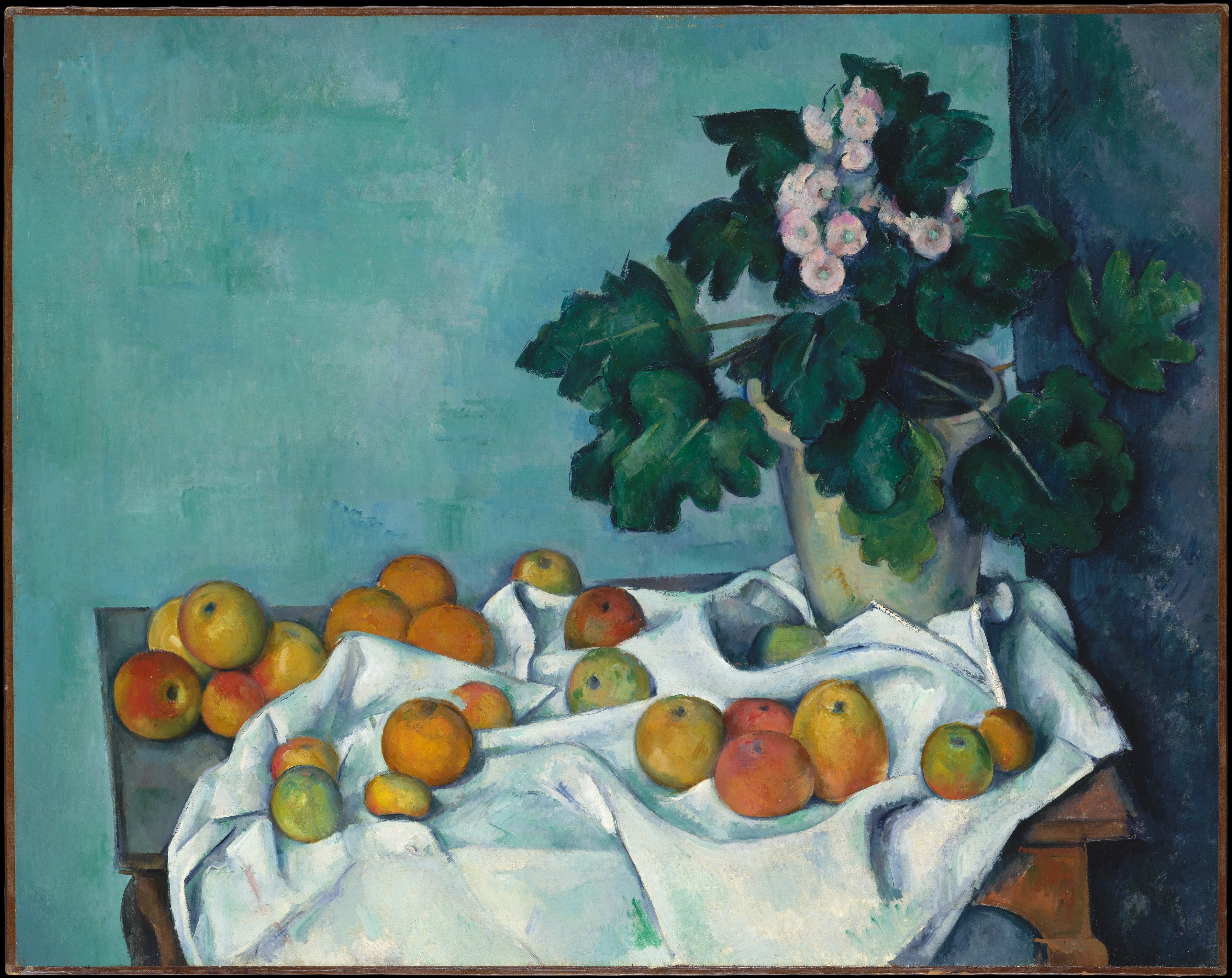
Still Life with Apples and a Pot of Primroses by Paul Cezanne, circa 1890
Still Life with Apples and a Pot of Primroses, Paul Cézanne, ca. 1890. The Metropolitan Museum of Art. Public Domain. View the museum record.
Blue hydrangeas arranged in an antique vessel for dining room color inspiration
Faded blues and greens gain depth beside warm wood, brass and evening light. A dining room palette can be built through contrast rather than exact repetition.
09 · Daylight and candlelight

Choose Color for the Hours You Use the Room

A painting changes as the room moves from day to evening. Cool north light can make blue and gray feel more restrained, while lamplight draws ochre, red and warm green forward. If the dining room is used mainly at night, evaluate art under the lighting that will actually accompany it.

Dark wall art does not necessarily make a small room feel smaller. A shadowed still life can create depth against pale walls and become luminous under a picture light. Conversely, a bright landscape can provide air in a room with deep paint or dark timber.

Choose one dominant relationship. Warm artwork against cool walls creates focus. Tonal art against related walls produces calm. A vivid accent can animate a neutral room, but it is often strongest when repeated only once elsewhere - in flowers, a small ceramic or a stripe within the textile.

Sacred Lotus I canvas print in an elegant dining room interior
For color with composure

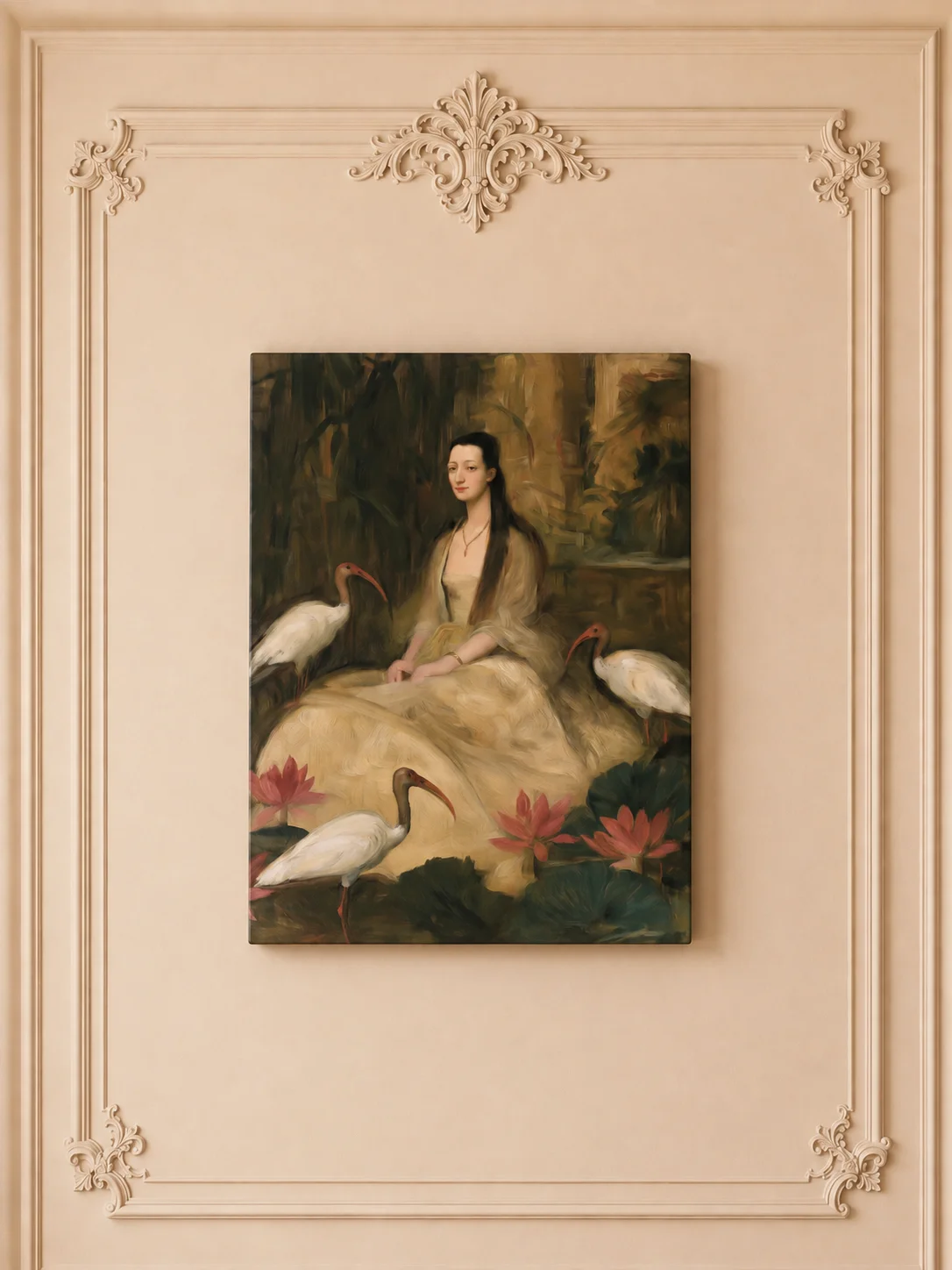
Sacred Lotus I

A botanical composition can bring color to a dining room without relying on the conventions of a European bouquet. Lotus forms, layered foliage and warm ivory introduce rhythm and symbolism while remaining easy to pair with natural materials.

Its vertical orientation works beside a cabinet, between windows or at the end of a rectangular table. Use the larger size where the wall needs a clear focal point, and allow the surrounding objects to remain restrained.

Shop Sacred Lotus I
Hands setting a simple breakfast table with linen in a collected dining room
A dining room succeeds through use. Art should support the rituals of the table rather than require the room to remain perfectly styled.
11 · What interrupts the room

10 Common Dining Room Wall Art Mistakes

  1. Choosing art only because it contains the same colors as the chairs or rug.
  2. Buying a work too small for the sideboard and trying to compensate with many unrelated objects.
  3. Hanging the artwork at standing eye level without checking the view from a dining chair.
  4. Placing art so high that it no longer belongs visually to the furniture beneath it.
  5. Using a tall centerpiece that permanently hides the focal point of the painting.
  6. Selecting literal food imagery when its mood does not suit the room.
  7. Ignoring glare from windows, chandeliers, picture lights or polished surfaces.
  8. Repeating every color and subject until the room feels themed instead of collected.
  9. Filling a gallery wall with pieces chosen as background rather than art worth seeing closely.
  10. Forgetting that the room should still feel compelling when the table is completely bare.
Frequently asked questions

Dining Room Wall Art FAQ

What type of wall art is best for a dining room?

Still lifes, landscapes, botanical art, portraiture, equestrian scenes and abstract works can all suit a dining room. Choose according to the atmosphere the room needs, then consider scale, sightline and evening light. The strongest subject is one you will enjoy seeing repeatedly from the table.

How large should art be above a dining room sideboard?

As a starting point, one artwork can occupy roughly two-thirds to three-quarters of the sideboard width. Adjust for the visual weight of the image, frame, lamps and objects. Test the proposed size with paper before purchasing or hanging.

How high should I hang art in a dining room?

Consider the seated sightline as well as conventional eye level. Above a sideboard, a gap of approximately 15 to 25 centimeters often connects the artwork to the furniture, but the correct distance depends on ceiling height, artwork size and the objects used below it.

Can I hang still life wall art in a modern dining room?

Yes. A traditional still life creates a rich counterpoint to clean architecture and contemporary furniture. Keep the surrounding styling restrained, and let the artwork introduce history, texture and depth rather than repeating its subject throughout the room.

Should dining room art match the wall color?

No exact match is necessary. Tonal harmony creates calm, while contrast creates focus. It is usually more effective to repeat one quiet note from the artwork - such as olive, cream, rust or blue - than to copy its entire palette.

Is one large canvas better than a gallery wall?

One large canvas creates a clear focal point and often suits rooms with patterned walls, substantial lighting or open-plan views. A gallery wall feels more collected and conversational. Choose according to the room's existing visual activity and the art you genuinely want to live with.

What art works well at the end of a dining table?

A vertical botanical, portrait or narrow landscape can create a strong destination at the end of a rectangular table. Check that the focal point remains visible above chair backs and flowers, and use enough scale to balance the length of the table.

Can canvas prints work in a formal dining room?

Yes. A well-chosen canvas print offers painterly presence without glare from glazing. Its success depends on image quality, appropriate scale and considered placement. Pair it with substantial furniture, good lighting and objects with varied age and texture.

How do I protect dining room art?

Keep artwork away from direct heat, persistent moisture and strong sunlight. Do not hang it where serving dishes or chair backs will repeatedly touch it. Dust gently according to the maker's care guidance and maintain stable indoor conditions where possible.

Art for rooms made for gathering

Let the Room Begin a Conversation

The best dining room wall art does not merely occupy the wall. It changes the quality of attention in the room - offering color in daylight, depth in the evening and something worth returning to across the table.

Choose the work that gives the room a point of view, then allow furniture, light and the rituals of gathering to build around it over time.

Explore All Canvas Prints