Equestrian Wall Art: A Timeless Tradition in Collected Interiors
From the country house portrait to the expressive study of a horse in motion, equestrian art brings history, vitality and a quiet sense of inheritance into the home.
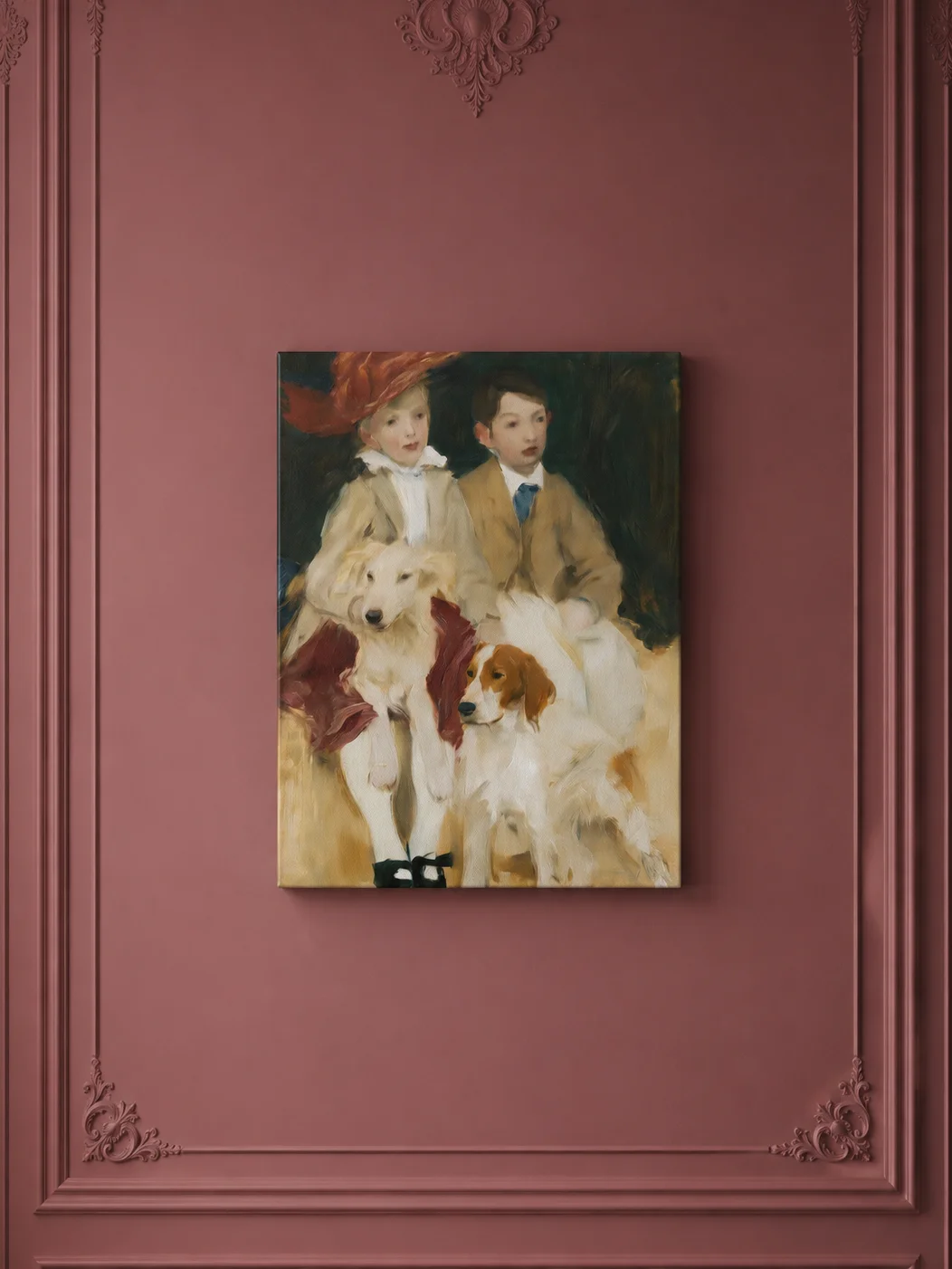
Few subjects carry the same balance of strength and grace as the horse. In art, it can appear ceremonial or intimate, still or in motion, alone in a landscape or accompanied by rider and hound. In a room, equestrian wall art does something equally distinctive: it introduces history without stiffness and movement without noise.
Long associated with country houses, sporting life and portraiture, horse paintings have moved far beyond a single decorative tradition. A quiet equine study can soften a contemporary apartment. A galloping figure can animate a formal sitting room. A portrait of a horse or sporting dog can bring personality to a library lined with books.
The most compelling equestrian interiors are not themed. They are layered. Leather, linen, florals, polished wood, modern lighting and inherited objects are allowed to coexist, while the artwork gives the room a point of view.
This guide looks beyond decoration to the history, symbolism, scale and atmosphere of equestrian art. It is designed to help you choose a work that belongs not only to the present room, but to the rooms—and stories—that may follow.
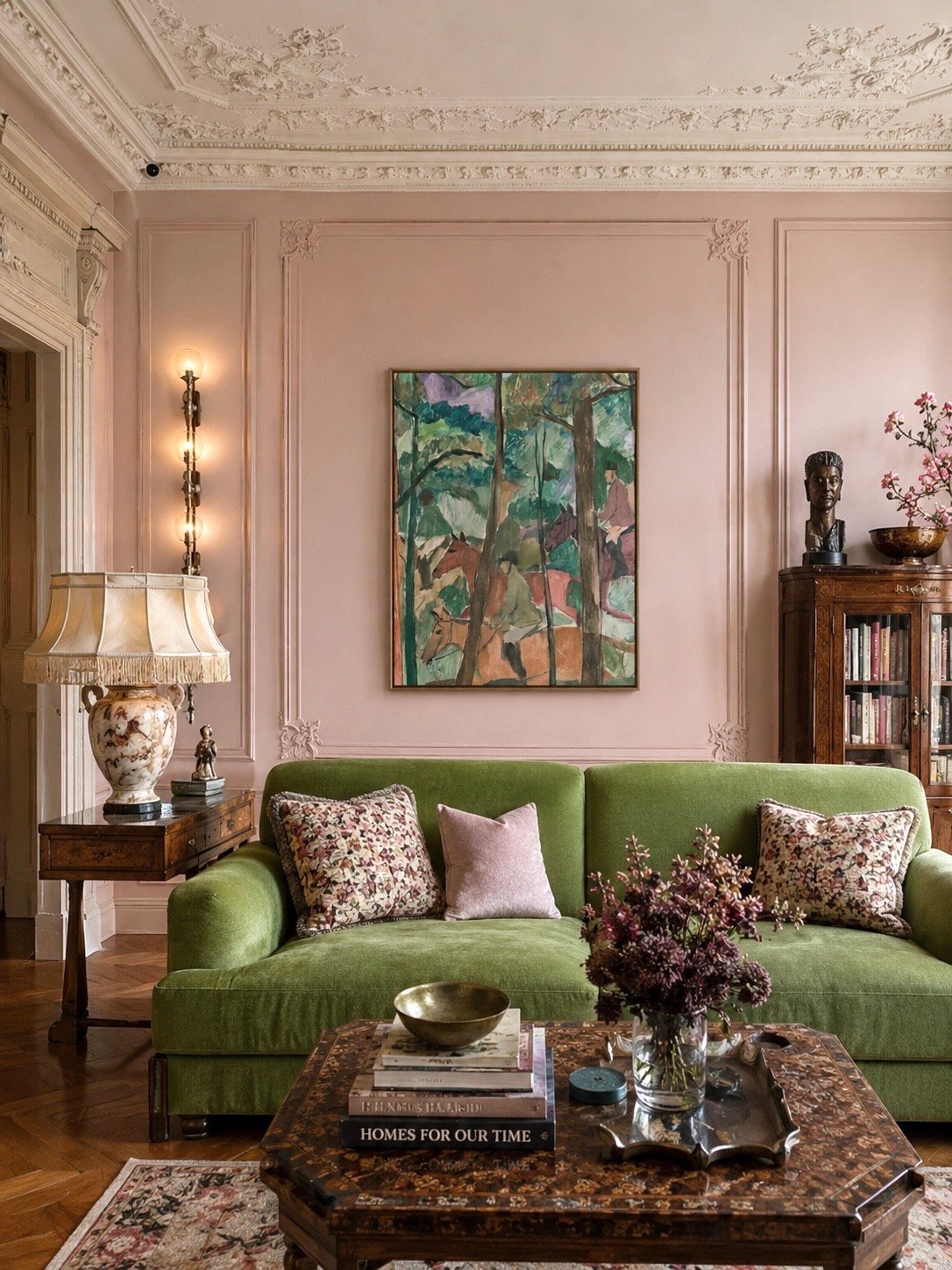
Why Equestrian Art Endures
The horse carries opposites beautifully: discipline and freedom, physical power and visual refinement. That tension gives equestrian art unusual emotional range. Even a restrained portrait has presence; an image of a horse in motion can change the rhythm of an entire wall.
It also belongs naturally to the vocabulary of a collected home. Equestrian pictures sit comfortably beside landscapes, botanical studies, family photographs and abstract works because they contain both figure and atmosphere. They suggest a life beyond the room—a path through woodland, an open field, a remembered journey.
Unlike a passing decorative motif, the horse has been interpreted across cultures and centuries. Its meaning changes with the artist, the sitter and the setting, allowing the subject to feel historical without becoming fixed in the past.
Shop Wild HeritageA Brief History of Equestrian Art
For much of art history, the mounted figure represented authority. Rulers, military leaders and aristocratic sitters appeared above the viewer, their horses controlled and idealized. The animal amplified the status of the rider: command over a powerful creature became an image of command itself.
Over time, attention moved from the rider to the horse. In Britain, sporting culture encouraged artists to observe individual animals, their anatomy, bloodlines and temperaments. Stable portraits and hunting scenes entered country houses not only as statements of ownership but as records of animals known and admired.
This shift is important for interiors today. A horse portrait can possess the compositional gravity of a human portrait while feeling less formal. It introduces lineage and character without requiring a literal family history.
What Equestrian Art Brings into a Room
Freedom
An open landscape and an unrestrained stride suggest possibility. In enclosed urban rooms, this sense of distance can be especially powerful.
Discipline
Horse and rider can express balance, attention and controlled energy. The subject adds structure without relying on rigid geometry.
Companionship
Portraits that include grooms, riders or dogs shift the meaning from status to relationship. They make a grand tradition feel human.
Movement
A raised hoof, turning head or diagonal rein gives the eye a path to follow. Movement can enliven even a restrained palette.
Memory
Because equestrian imagery carries centuries of association, it can lend a new interior the feeling of something remembered or inherited.
Character
No two horses hold themselves in quite the same way. The strongest works capture temperament rather than offering a generic emblem.
Choose the quality your room is missing. The subject may be the horse, but the true decision is emotional.
When the Horse Becomes the Portrait
In George Stubbs’s 1768 painting, the Duke of Dorset’s hunter dominates the composition. The groom and dog establish scale and context, yet the horse remains the true sitter. Its pale body is carefully observed, its stillness charged with attention.
This hierarchy offers a useful lesson for decorating. A work does not need constant action to command a room. Stillness can create presence when scale, silhouette and negative space are strong. In a library or formal sitting room, this kind of equestrian portrait can act as an architectural anchor.
Surround it with objects that deepen rather than repeat its world: a contemporary lamp, a floral textile, a stack of art books or a sculptural ceramic. The room will feel richer when the artwork is allowed to carry the equestrian reference on its own.
Rosa Bonheur and the Drama of Movement
By the nineteenth century, equestrian painting could be monumental without centering a ruler or owner. Rosa Bonheur’s The Horse Fair transforms observation into spectacle: powerful horses surge across the canvas, controlled and yet barely contained.
Bonheur visited the Paris horse market twice weekly for a year and a half to make studies. The resulting painting, begun in 1852 and shown at the Salon of 1853, measures more than five metres wide. Its scale turns the market into an immersive field of muscle, dust, gesture and light.
For the home, its lesson is not that every equestrian artwork must be large. It is that movement should be read across the entire composition. The direction of the horses, the open space ahead of them and the density of the group all affect how the image will live on a wall.
The Beauty of the Unfinished Study
Preparatory drawings reveal another side of equestrian art. Freed from ceremonial detail, the horse becomes line, weight, balance and repeated observation. Several positions may inhabit one sheet; a leg is corrected, a head reconsidered, movement understood through accumulation.
In an interior, a study feels immediate and intelligent. It suits a quiet bedroom, a desk, a narrow wall between shelves or a gallery arrangement where a looser work can relieve more finished paintings.
This is also why sketch-like contemporary pieces pair so well with antiques. Their subject carries history, while their incompleteness keeps the room alive.
Sheet of Studies for “The Horse Fair”, Rosa Bonheur, 1840–99. The Metropolitan Museum of Art. Public Domain. View the museum record.
How to Read an Equestrian Painting
Before deciding whether a work suits the sofa or the wall color, spend time with the image itself. Equestrian art is unusually physical: posture, weight and direction communicate before narrative or symbolism. Learning to notice these details leads to a more personal choice.
Begin with the head and gaze
A lowered head creates calm and inwardness. Ears turned forward suggest alertness; a glance outside the frame introduces expectation. The gaze often determines whether the picture feels contemplative or charged.
Notice where the weight falls
A planted stance gives stability. A lifted hoof contains the promise of movement. In a gallop, diagonals pull the eye across the surface. These lines will continue to influence how the artwork feels once it is surrounded by furniture and architecture.
Look at the space around the figure
Negative space is never empty. Open ground in front of a horse allows it to move visually; a close crop creates immediacy; dense woodland produces intimacy and mystery. Consider whether your room needs expansion or enclosure.
Observe the relationship between animal and human
Does the rider command, accompany or almost disappear? Does a groom meet the horse’s gaze? Are dogs active participants or quiet witnesses? These relationships distinguish a living scene from a decorative symbol.
Read the weather and light
A luminous sky can open a dark room. Golden evening light intensifies timber and brass. Mist, shadow and muted weather create the feeling of memory. Atmosphere often matters more than the literal breed or setting.
The work you continue to discover after several viewings is usually the work that will continue to live well in a home.
Choose the Feeling Before the Subject
The solitary portrait
Quiet, noble and architectural. A single horse holds a wall with the authority of a traditional portrait while remaining softer and less formal.
Horse and rider
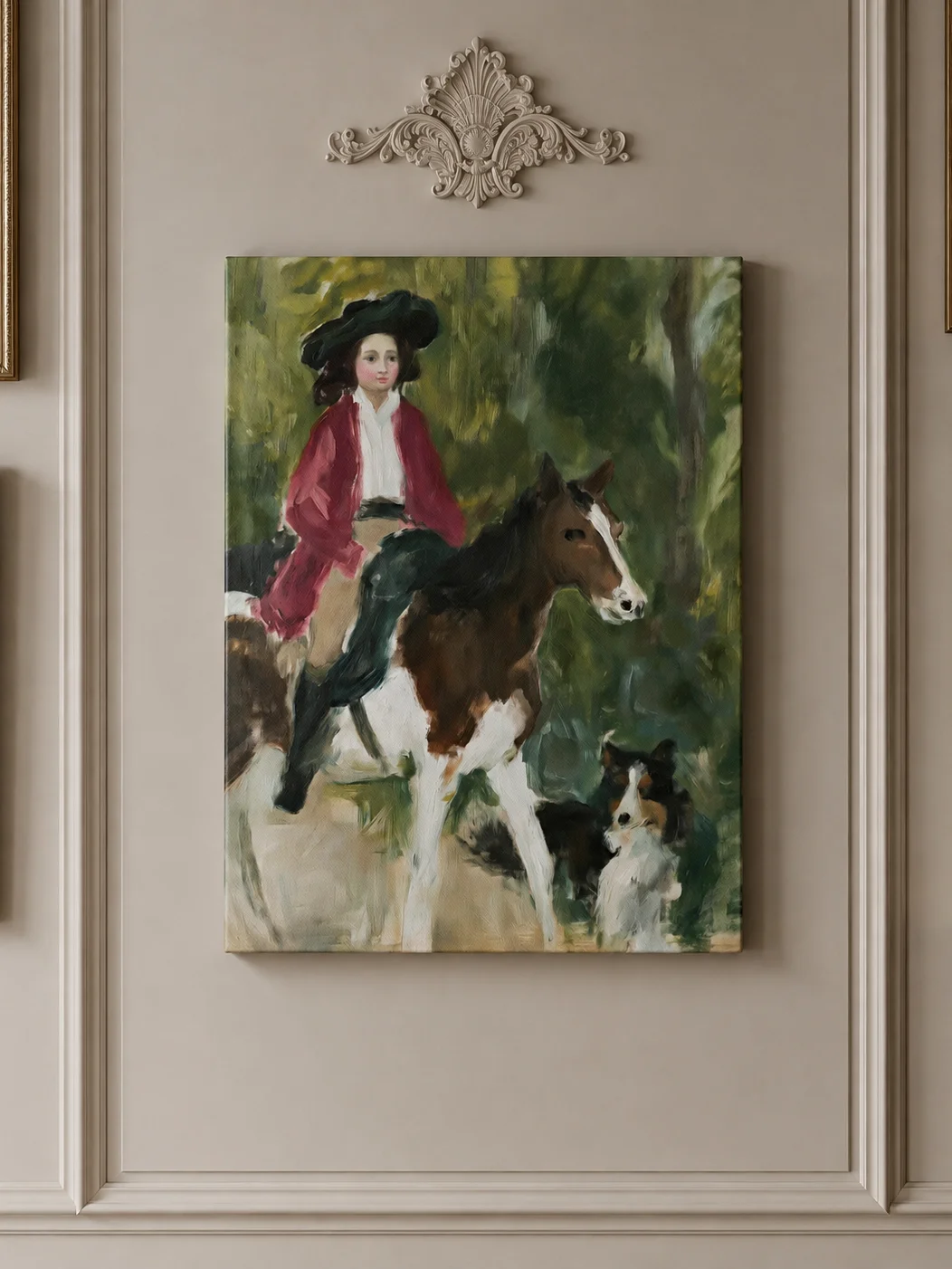
A rider introduces narrative and human scale. These works feel natural in libraries, entrances and rooms containing antiques or travel objects.
Movement and gesture
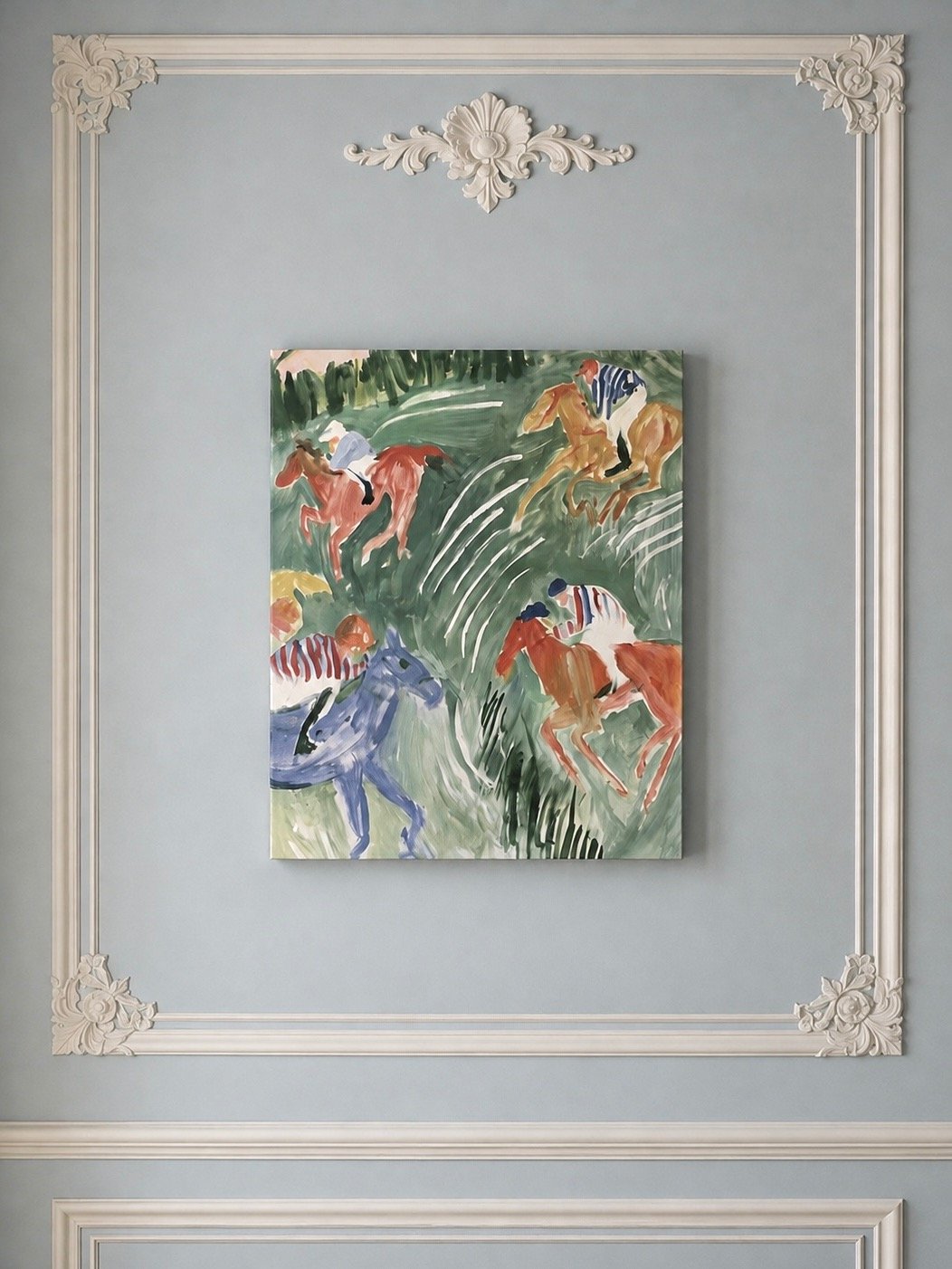
Galloping figures and expressive studies bring energy to calm rooms. They work especially well when the furniture is symmetrical or the palette restrained.
Pastoral scenes
Horses within woodland or open landscape create depth. They act almost like a window and are effective above sofas and consoles.
Country companions
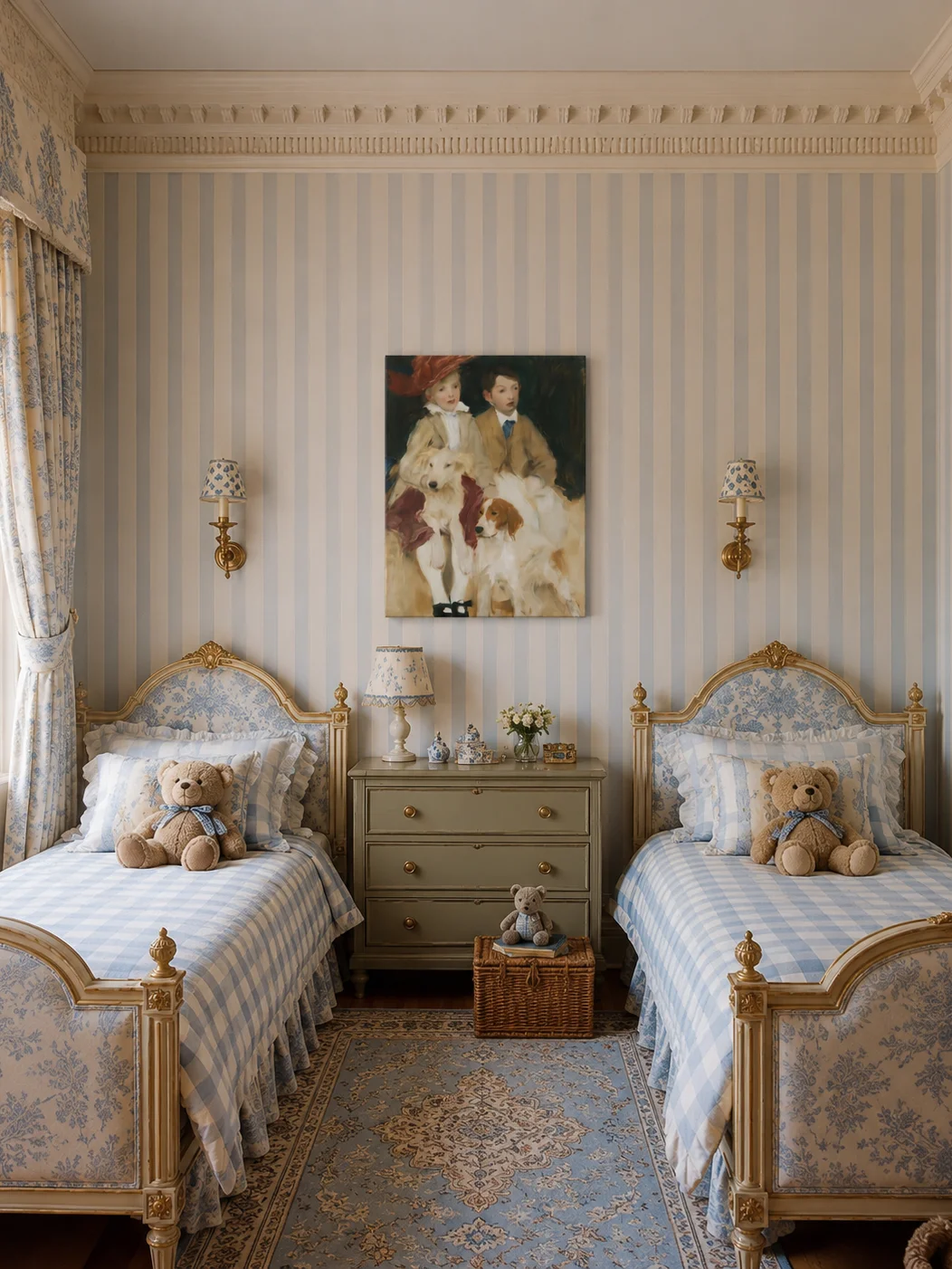
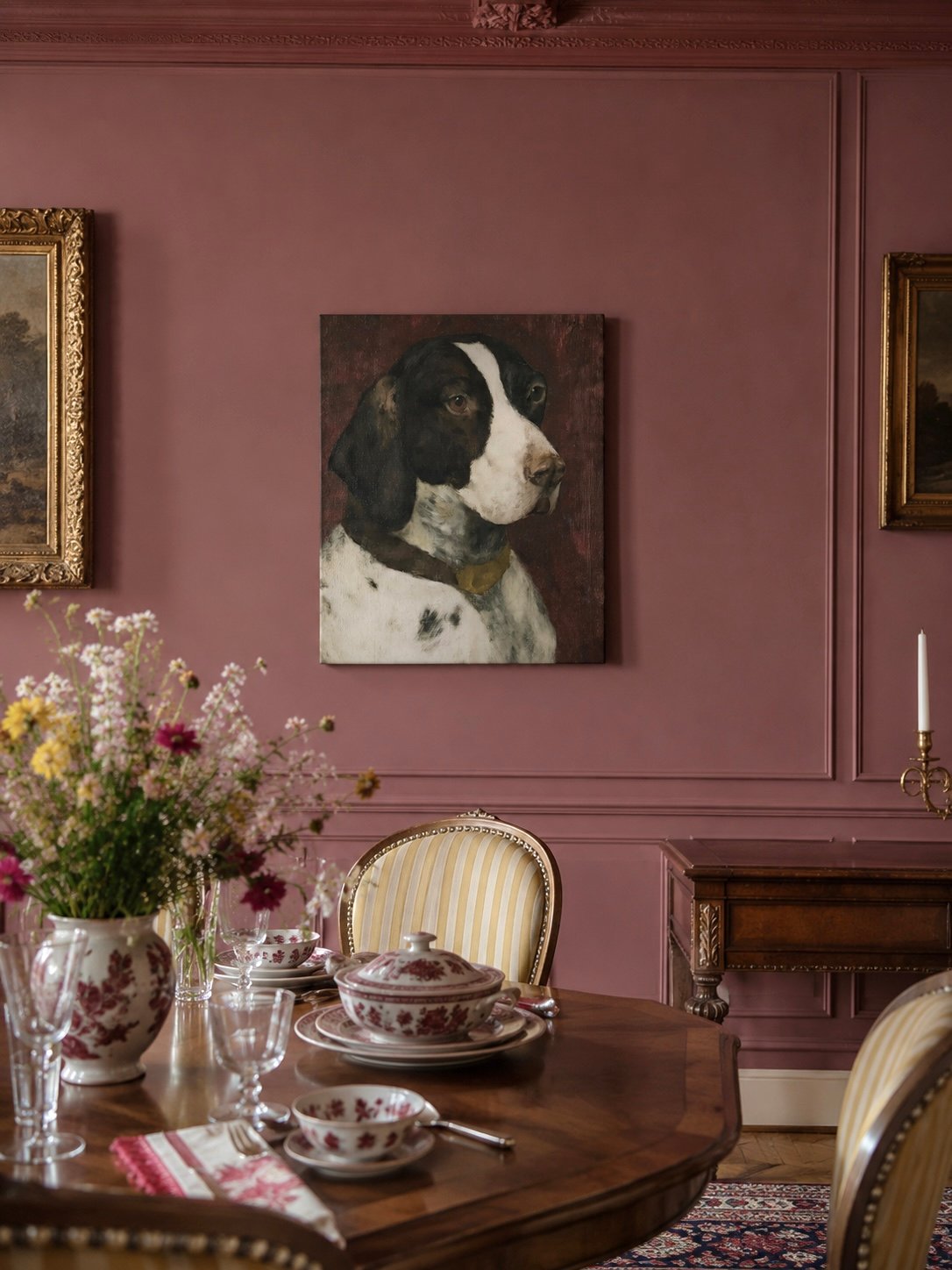
Horses, hounds and sporting dogs introduce warmth and character. Their appeal is intimate rather than ceremonial.
Studies and series
A pair or trio of related works creates cadence. It is an elegant solution for a long wall, stairway or the space above a desk.
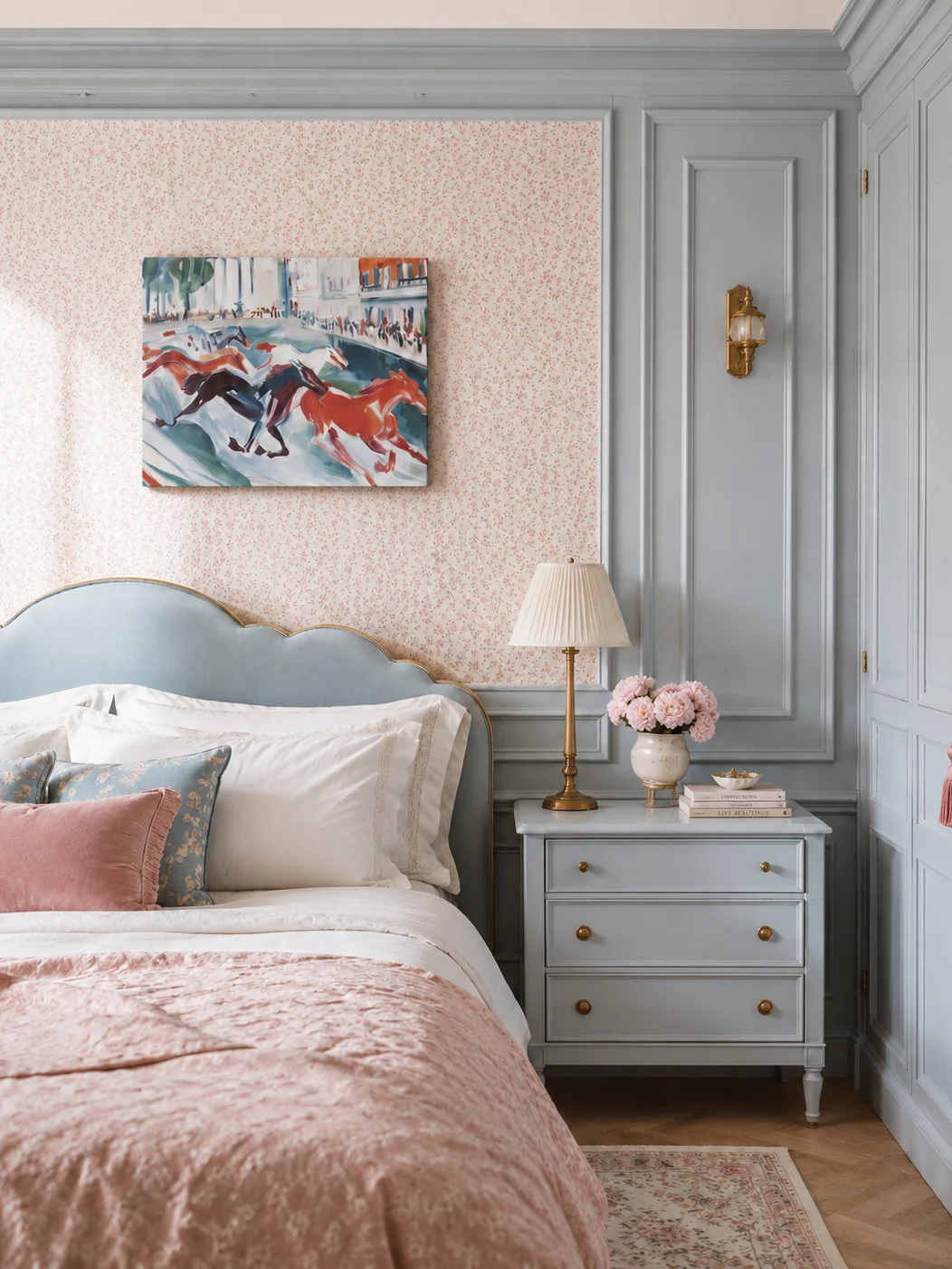
Equestrian Motion I
A study in energy and restraint, this work is suited to rooms that need movement without visual excess. Its painterly character pairs naturally with aged wood, linen, books and quieter architectural colors.
Displayed alone, it becomes a decisive focal point. As part of a series, it creates the visual cadence of sequential studies.
Shop the artworkContinue directly with Part Two below.