Free shipping on all orders over $100.
The House of Sun Editions Journal

How to Choose Art for Your Home

The complete guide to choosing the right size, style and placement—and creating rooms that feel personal, layered and collected over time.


Layered living room with large-scale artwork, sculpture, patterned upholstery and collected objects
The art of a collected room — scale, character and objects chosen to live together over time.

Choosing art for a home is one of the most personal decisions in decorating. Furniture gives a room its function. Lighting changes its mood. Textiles soften its edges. But artwork does something quieter and more lasting: it gives the room a point of view.

The right painting can make an ordinary wall feel inevitable. It can connect an antique table with a contemporary sofa, bring warmth to a restrained palette, or give a newly decorated room the sense that it has been evolving for years.

And yet choosing wall art often becomes one of the decisions people postpone. The questions seem deceptively simple. How large should the artwork be? Should it match the sofa? Does every piece in a room need to belong to the same style? Is one large canvas better than several smaller works? How high should artwork hang?

The answer is rarely a formula. The most memorable interiors are not assembled by matching every element perfectly. They are created through proportion, rhythm, contrast and—above all—personal conviction.

This guide is designed to help you choose art with confidence: from scale and placement to color, subject matter and the subtler question of how artwork should feel in a room. If your goal is a home that feels layered rather than decorated, begin here.

01 — Begin with the room

What to Consider Before Choosing Art

Before looking for a specific painting, look at the room itself. Not only at its colors, but at its architecture, proportions, materials and existing objects.

A room with high ceilings, generous mouldings and a long sofa may need artwork with enough physical presence to hold the wall. A small reading room lined with books might respond better to intimate works placed among shelves and lamps. A minimal apartment may benefit from a painting that introduces history and softness; a richly patterned room may need art with a calmer visual rhythm.

Think, too, about what the room already says. Is it formal or relaxed? Light or atmospheric? Spare or abundant? The artwork does not need to repeat that character. Often, the most interesting choice is the one that introduces a gentle counterpoint.

Ask what the room is missing

If the space feels cold, look for warmth rather than another neutral object. If it feels overly coordinated, introduce something with age, texture or unexpected color. If the furniture feels visually heavy, an expansive landscape can create distance and air. If the architecture lacks detail, a richly painted canvas can provide the depth the room is missing.

Most importantly, do not begin with the question, “What matches?” Begin with, “What would make this room more interesting to live with?”

Good art does not have to match a room. It has to belong there.

House of Sun Editions

This distinction is central to the philosophy of a collected home. The goal is not visual uniformity. It is the feeling that every piece has been chosen with enough care to earn its place.

English country style library with a salon wall of landscape paintings, books, ceramics and layered furniture
A salon-style arrangement works because the paintings share atmosphere without becoming identical.
02 — Scale & proportion

How to Choose the Right Size Art for Your Wall

Scale is one of the fastest ways to make artwork feel intentional. A beautiful piece that is too small for its wall can look isolated. A work that is generous enough in scale gives the eye somewhere to rest and helps anchor the furniture beneath it.

When artwork hangs above a sofa, console, bed or sideboard, a useful starting point is for the artwork—or the complete grouping—to occupy roughly two-thirds to three-quarters of the furniture width. This is not a law. It is simply a dependable proportion from which you can adjust according to the architecture and the visual weight of the piece.

A practical starting point
  • Above a 90 in / 229 cm sofa, consider artwork or a grouping around 60–68 in / 152–173 cm wide.
  • Above a 60 in / 152 cm console, begin around 40–45 in / 102–114 cm wide.
  • For very tall walls, consider height as seriously as width; a small horizontal piece can feel lost even if its width is technically correct.
  • When in doubt between two sizes for an empty statement wall, the more generous scale often feels more resolved.

Measure the relationship, not only the wall

The relevant measurement is rarely the entire wall. It is the visual zone created by the furniture. A 4-metre wall can still call for a relatively intimate painting if a small desk occupies only one corner. Conversely, a large sectional can demand a substantial work even when the room itself is modest.

Before purchasing, mark the proposed dimensions with painter's tape. Step back to the doorway, sit in the chair you use most often and look again. Scale changes dramatically with viewing distance.

Small artwork can still have presence

Small works are most convincing when their scale feels intentional. Hang one over a narrow bedside table. Rest one on a shelf between books. Pair two related works closely. Or build a group in which several smaller pieces read as one visual composition.

Size should create confidence, not simply fill space.
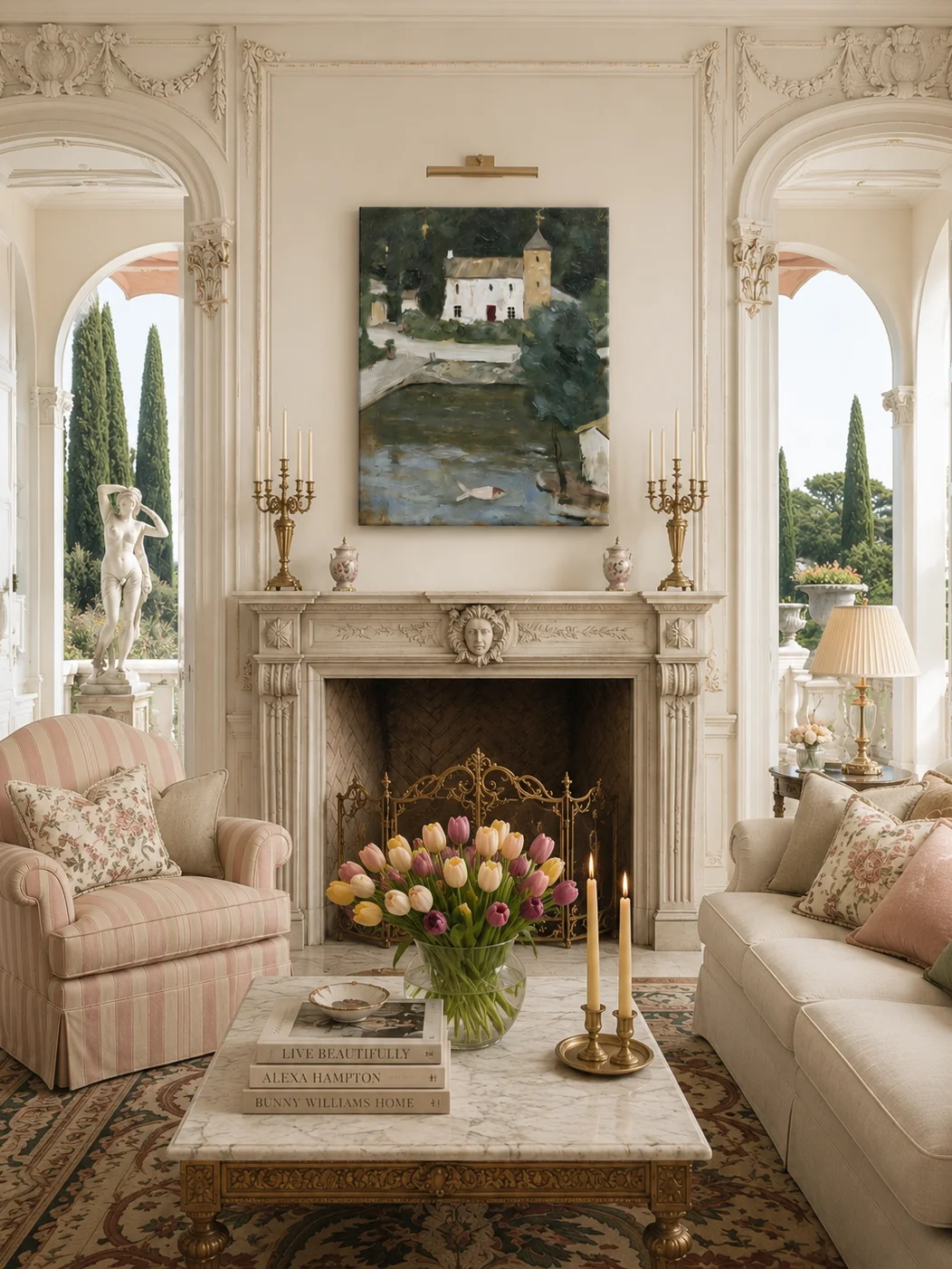
Maison du Lac I canvas print styled in a layered interior
From the Maison Collection

Maison du Lac I

A softly layered landscape in olive, muted blue and warm stone tones—designed to bring calm and understated character to collected interiors.

Shop the Artwork
03 — Hanging art

Where and How High to Hang Artwork

Artwork should feel connected to the room rather than floating above it. A common gallery convention places the center of a work at approximately 57–60 in / 145–152 cm from the floor. In a home, however, furniture changes the equation.

Above a sofa, headboard or console, start with roughly 6–10 in / 15–25 cm between the furniture and the bottom edge of the artwork. The exact distance depends on mouldings, lamps, the height of the furniture and the proportions of the work. What matters is visual connection.

Let architecture guide the placement

Door frames, fireplace mantels, picture rails, panelling and windows already create lines within a room. Artwork feels especially considered when it responds to those lines. A painting might align loosely with the top of a doorway, center over a panel, or sit slightly lower beside a reading lamp because that is where the eye naturally lands.

Do not automatically center art on the wall

Center it on the composition. If a console sits off-center because of a door, the painting can center on the console. If an armchair and lamp create a reading corner, a small work can belong to that vignette rather than the entire wall.

This is one of the quiet secrets of sophisticated interiors: rooms are composed as a series of relationships, not a collection of isolated walls.

Collected living room with large landscape paintings, blue-green walls, floral arrangements and traditional furniture
Large-scale landscapes create architecture of their own, balancing generous furniture and high ceilings.
04 — Composition

One Large Artwork or a Gallery Wall?

Both can be timeless. The choice depends on the kind of energy you want the wall to hold.

Choose one large artwork when you want calm

A single substantial painting creates authority and breathing room. It is especially effective above a large sofa, fireplace, bed or dining console. Landscapes work beautifully at scale because they create a sense of depth; botanical compositions can bring the garden into the room; a portrait can give an otherwise restrained space a memorable focal point.

Choose several works when you want rhythm and discovery

A gallery wall is naturally more narrative. It rewards looking slowly. The best examples rarely rely on identical frames and mathematically equal spacing. Instead, they establish a visual conversation through recurring colors, subjects, periods or proportions.

Begin with the strongest work, then build outward. Mix portrait and landscape orientations. Allow one or two smaller pieces to interrupt the grid. Keep enough consistency—in frame tones, palette or subject matter—that the grouping reads as intentional.

Try pairs and trios before a full gallery wall

Two related works can be one of the most elegant solutions for a difficult wall. They provide more rhythm than a single piece but remain quieter than a salon hang. A pair of botanical studies, two equestrian scenes or a small landscape sequence can frame a console or create symmetry around a bed.

05 — Finding your visual language

How to Choose an Art Style for Your Home

The strongest rooms are rarely faithful to one period. A Georgian-inspired interior can hold contemporary art. A modern apartment can be transformed by an old-world landscape. A floral canvas can soften strict architecture. The question is not whether art and furniture come from the same stylistic family; it is whether they create an interesting relationship.

Start by noticing what you repeatedly save, photograph or return to. Perhaps you are drawn to moody landscapes, botanical studies, equestrian scenes, portraits, classical architecture or the visual languages of ancient cultures. Repetition reveals taste more reliably than trends do.

For romantic, garden-led rooms

Botanical studies and floral compositions introduce organic movement and color. Explore the Botanica Collection.

For country & heritage interiors

Equestrian and sporting subjects sit naturally beside leather, wood, checks and tailored upholstery. Explore the Heritage Collection.

For architectural, European rooms

Landscapes, villas and quietly narrative scenes add distance and atmosphere. Explore the Maison Collection.

For eclectic, collector-led rooms

Classical and culturally inspired subjects introduce history and symbolism. Explore the Ancient Worlds Collection.

If you are building a home slowly, you do not need to choose only one of these languages. A collected interior becomes richer when different subjects coexist through a shared sensibility.
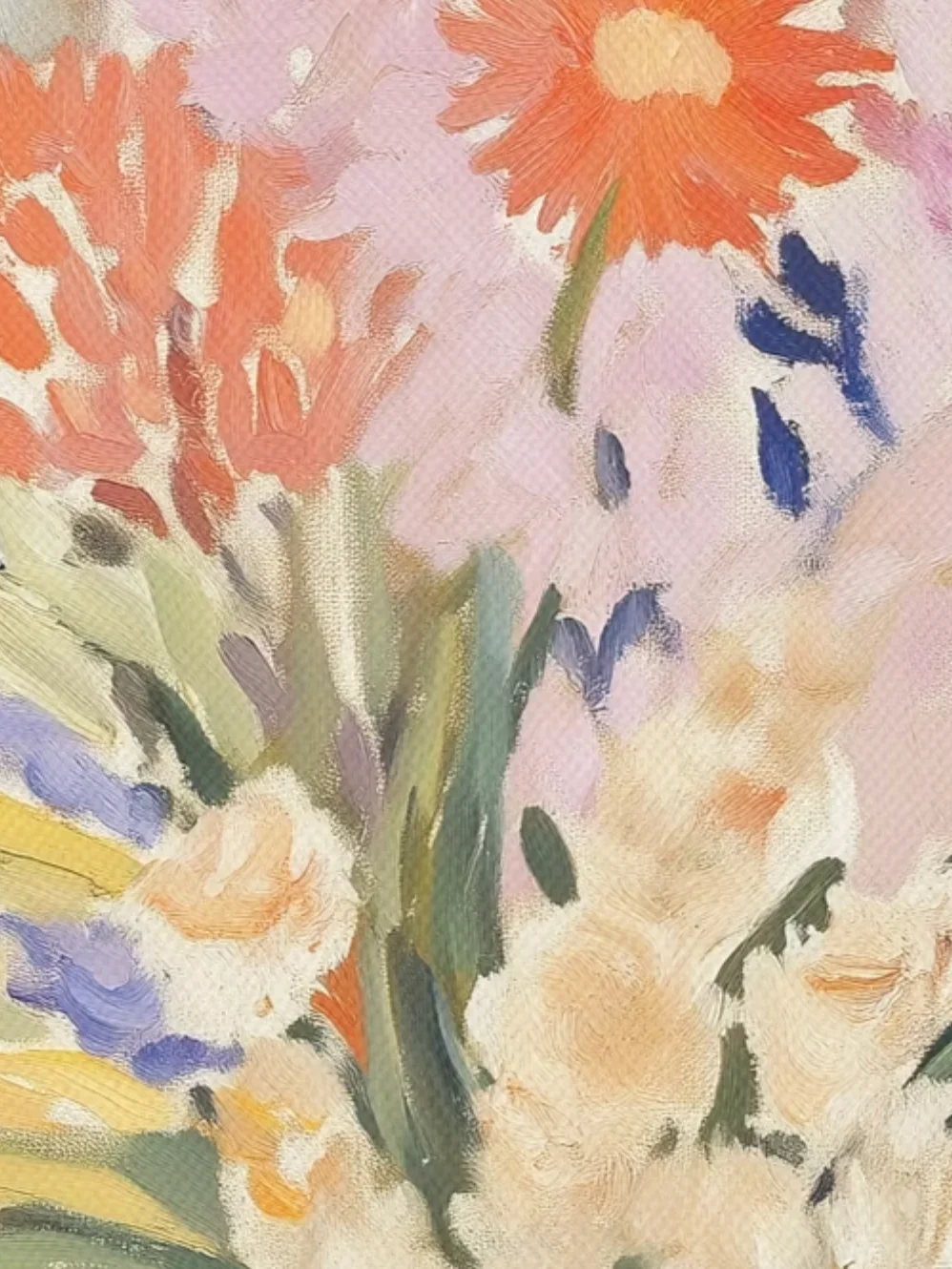
Botanical Arrangement I floral canvas print displayed in a collected home
From Botanica

Botanical Arrangement I

Layered florals and softly painterly color bring warmth and movement without requiring the rest of the room to match.

Shop the Artwork
Pink layered living room with floral painting, books, patterned upholstery and fresh flowers
Color need not be repeated literally. A room feels richer when artwork, textiles and flowers echo rather than match.
06 — Color

Should Your Artwork Match Your Room?

No. In fact, choosing art only because it repeats the exact colors of a sofa or rug is one of the easiest ways to make a room feel overly designed.

Artwork can relate to a room without matching it. A muted green landscape may deepen a room with burgundy walls. A blush botanical can soften dark wood. A painting with blue only in the sky may be enough to establish a connection with blue-and-white ceramics elsewhere in the room.

Look for echoes rather than matches

An echo can be subtle: the ochre of a painted field repeated in a brass lamp; a dusty rose appearing both in a flower painting and a striped cushion; the cool grey of a landscape picked up by stone around a fireplace.

This creates cohesion without making the interior feel formulaic.

Use art to introduce a new color

A painting is also one of the safest places to introduce a color that appears nowhere else. Because art is read as an independent object, it is allowed to surprise. A deep red painting in a pale room can become the single note that gives the space tension and memory.

Do not fear a painting that changes with the light

Complex artwork often reveals different colors throughout the day. Morning light may emphasize soft blues; lamplight may bring forward ochre and red. This is part of what makes living with art different from choosing decoration to complete a palette.

07 — Subject matter

What Kind of Artwork Should You Choose?

Subject matter influences the emotional temperature of a room. The most useful question is not which subject is fashionable, but what atmosphere you want to return to every day.

Landscapes

Landscapes create depth. They are particularly effective in rooms that need a sense of distance or softness: living rooms, studies, bedrooms and dining rooms. Country houses, garden views and pastoral scenes naturally complement antique woods, linen and traditional architecture. Explore atmospheric landscapes in the Maison Collection.

Botanical and floral art

Flowers introduce movement and irregularity. Unlike a decorative pattern, a painterly botanical composition can hold many colors while still feeling natural. Botanical art is especially beautiful in rooms with books, ceramics, natural materials and changing seasonal flowers. Browse the Botanica Collection.

Equestrian and sporting art

Equestrian works carry both movement and tradition. They work naturally in libraries, studies and country-inspired rooms but can be even more interesting against contemporary furniture. The contrast prevents heritage imagery from feeling themed. Discover the Heritage Collection.

Classical and ancient-world subjects

Art inspired by classical civilizations, historic symbolism and cultural memory introduces another kind of depth: the feeling that the room belongs to a larger story. These works sit beautifully among sculpture, books, collected ceramics and objects from travel. Explore the Ancient Worlds Collection.

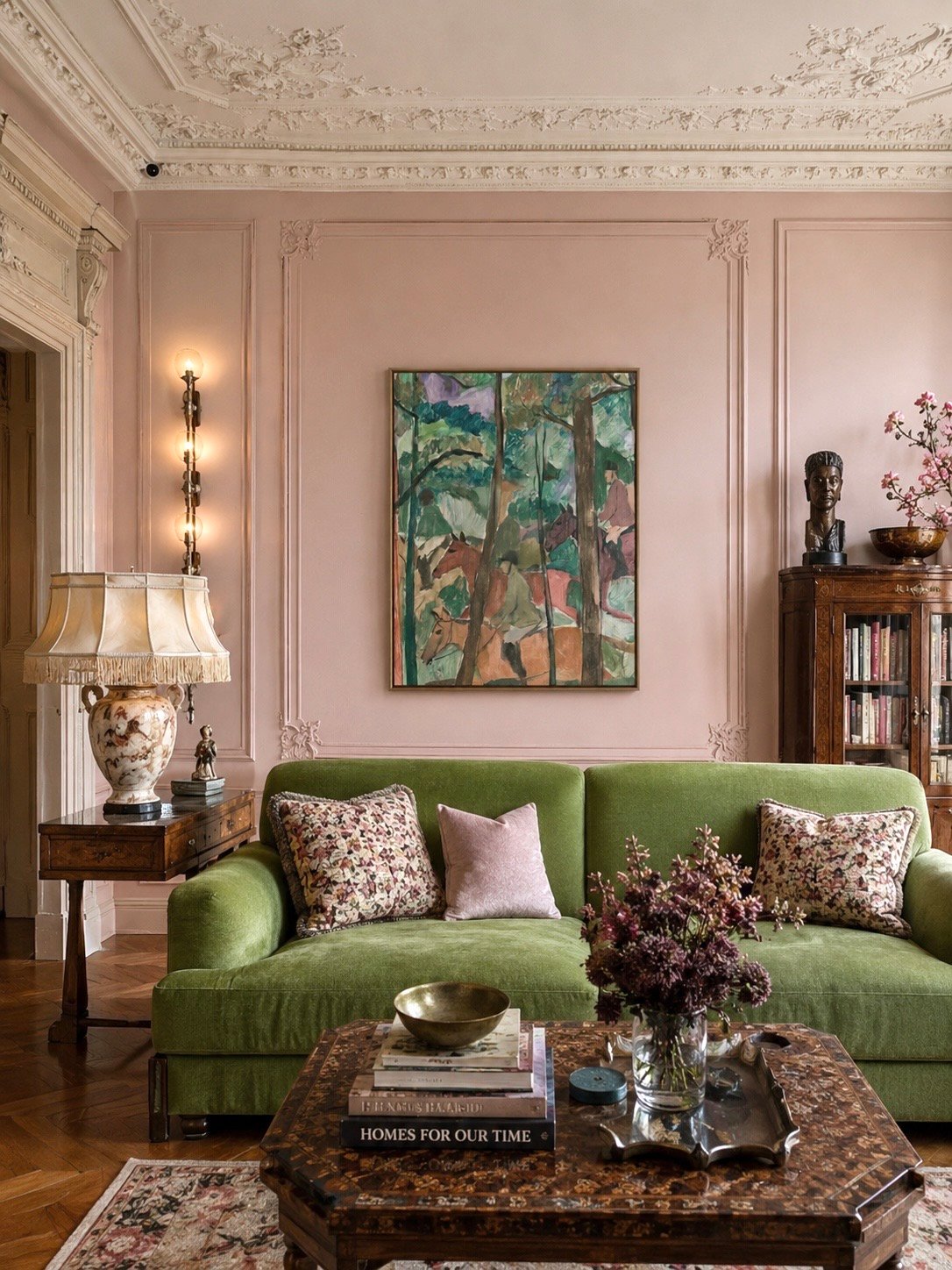
Wild Heritage equestrian canvas print styled in an interior
From the Heritage Collection

Wild Heritage

An expressive equestrian composition that brings movement, color and the language of classic sporting art into a layered interior.

Shop the Artwork
08 — Room by room

How to Choose Art for Every Room

Living room

The living room often carries the visual identity of the home, so give its art enough presence. Above a sofa, consider one generous work or a grouping that occupies much of the furniture's width. On walls beside windows or bookcases, smaller pieces can create quieter moments.

Choose something you are willing to see every day. Living-room art does not need to be neutral simply because it is prominent. A strong landscape, botanical composition or figurative work can become the element that makes the room memorable.

Bedroom

Bedrooms generally benefit from a quieter rhythm. Landscapes, gardens and restrained figurative works can create atmosphere without visual noise. Above the bed, keep the artwork connected to the headboard and avoid choosing a piece so small that it seems to float.

Do not overlook walls beside a dresser or reading chair. Often the most personal placement is not directly above the bed at all.

Dining room

Dining rooms can hold surprisingly expressive art. They are experienced seated, often in evening light, and are naturally associated with conversation. Still lifes, florals, landscapes and portraits all work beautifully here. Consider how the painting looks under lamplight and candlelight, not only during the day.

Entryway and hallway

An entry establishes the visual language of the house quickly. One confident artwork can do more than many small accessories. In a long hallway, a sequence of smaller works encourages movement and makes transitional space feel intentional.

Home office and library

These rooms reward density. Books, framed works, objects and task lighting can coexist without feeling cluttered because the room is already associated with concentration and collecting. Equestrian art, landscapes, classical subjects and portraits are particularly at home here.

Kitchen

Art in a kitchen immediately makes the room feel lived in rather than purely functional. Choose a protected wall away from steam and splashes. A small landscape, botanical work or still life can transform the space between shelves, above a breakfast table or beside a pantry door.

09 — Collected interiors

How to Mix Artwork from Different Styles and Periods

A home becomes more convincing when it does not appear to have been purchased from one source at one moment in time.

Mixing art is not about making everything different. It is about finding enough relationships to allow contrast. A classical figure and an equestrian scene may share warm earth tones. A botanical painting and a landscape may share expressive brushwork. A contemporary sofa may give an old-world subject the clean space it needs.

Use frames as punctuation

Frames do not need to match. Gilt, dark wood and simpler profiles can coexist. What matters is distribution. If every ornate frame is clustered on one side of a wall, the composition can feel unbalanced. Spread visual weight as thoughtfully as color.

Repeat a quality, not a formula

Perhaps several works share muted color. Perhaps they all contain nature. Perhaps they were chosen because they feel slightly romantic or because their brushwork is loose. That underlying quality is enough to make a collection feel coherent.

Allow one piece to be the outsider

Some of the best rooms contain one artwork that seems, at first, not to belong. It may be more graphic, more colorful, older or more contemporary than everything around it. That exception creates tension—and tension creates interest.

For a deeper look at this philosophy, read How to Create a Collected Home: The Complete Guide to Timeless Living.

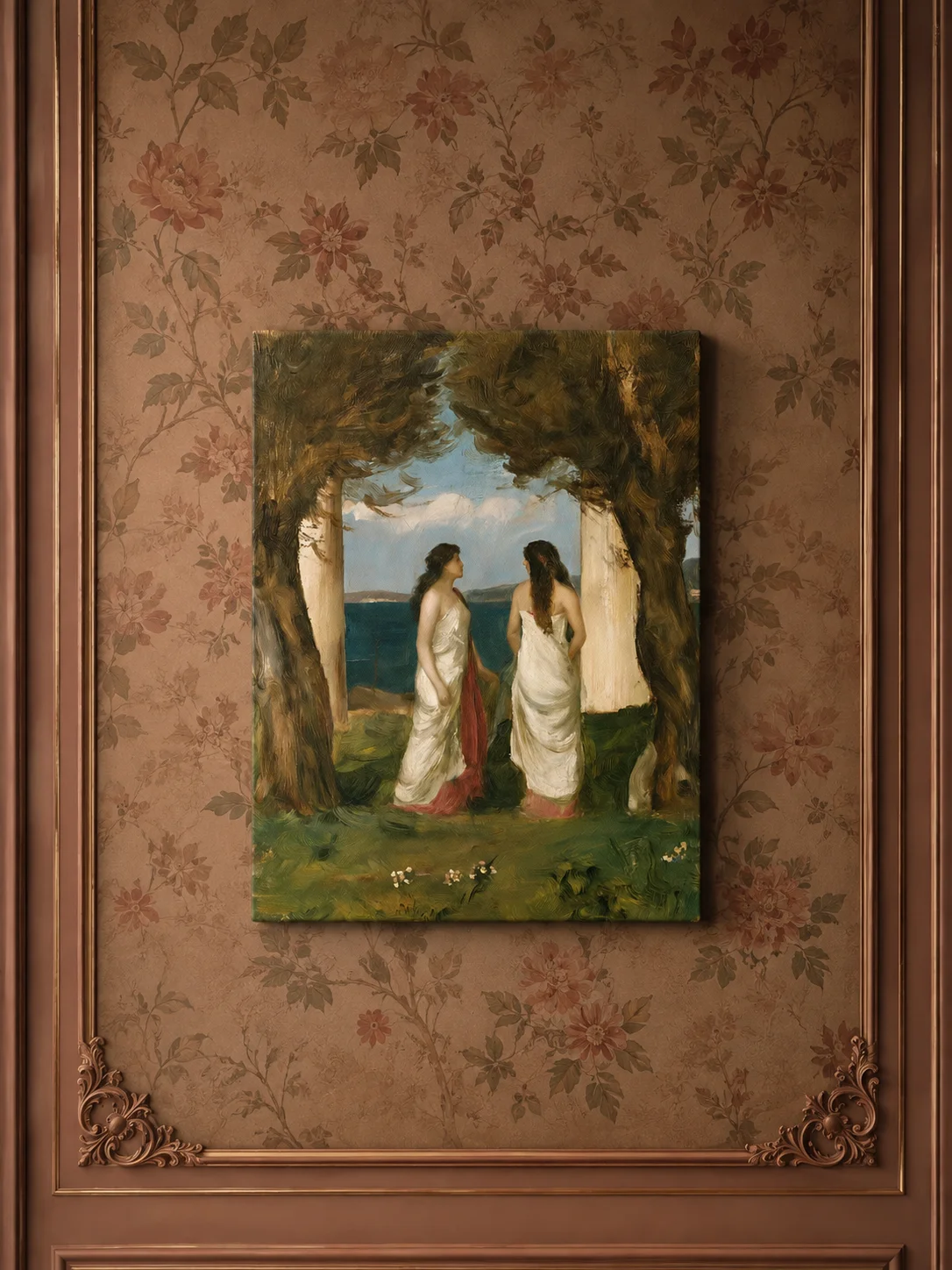
Arcadian Dialogue I classical canvas artwork styled in a collected interior
From Ancient Worlds

Arcadian Dialogue I

A classical Mediterranean scene inspired by the philosophical spirit of Ancient Greece, bringing history and quiet narrative to collector-led rooms.

Shop the Artwork
10 — Canvas in a collected home

Choosing Canvas Art That Feels Timeless

Canvas is particularly effective in layered interiors because its surface carries visual texture without the reflection of glass. A gallery-wrapped canvas also creates a finished object with depth, allowing the artwork to hold a wall confidently on its own.

What determines whether canvas art feels timeless is less the medium than the image itself. Look for subject matter and color that can live alongside changing furniture, seasons and rooms. Landscapes, botanicals, equestrian works, portraiture and classical imagery have endured in interiors precisely because they are not tied to a single decorating moment.

House of Sun Editions creates premium canvas prints for homes that prefer atmosphere and character to temporary trends. For more detail on integrating the medium into layered rooms, read our guide to canvas prints for collected homes.

Choose for the next room, too

One of the best tests before buying is to imagine the artwork somewhere else. Could it move from the living room to a bedroom? From an apartment to a future house? From a pale wall to a dark one? Art with this kind of flexibility tends to remain part of a home for far longer.

11 — What to avoid

10 Common Mistakes When Choosing Wall Art

1. Buying art only because it matches the sofa

Coordination can be useful, but exact matching often makes art feel like an accessory. Choose a work that has its own reason for being in the room.

2. Choosing a piece that is too small

This is especially common above sofas and beds. If a single piece feels lost, choose a larger format or create a grouping.

3. Hanging artwork too high

Art should participate in the furniture arrangement. Lowering a painting by only a few inches can make an entire wall feel more resolved.

4. Treating every wall equally

Some walls need art; others need emptiness. Visual breathing room gives important pieces greater presence.

5. Buying all the art at once

A meaningful collection benefits from time. Let your eye develop. Leave a wall unfinished until the right piece appears.

6. Assuming all frames must match

Frame variety can create depth. Aim for balance in tone and visual weight rather than uniformity.

7. Ignoring the viewing distance

A detailed small work may be perfect in a hallway but disappear across a large living room. Always consider where you will actually see the piece from.

8. Following a trend you do not genuinely love

Artwork is one of the most visible objects in a room. If you are already slightly tired of a trend, it is unlikely to become more meaningful with time.

9. Choosing only “safe” art

Rooms need personality. One unexpected color, subject or scale can give the entire interior its character.

10. Believing the collection must be finished

The strongest homes remain open to discovery. Art accumulates through curiosity, travel, changing taste and the simple pleasure of finding something you want to continue looking at.

12 — A simple process

How to Start Choosing Art for Your Home

If an empty wall feels intimidating, make the decision smaller.

Step 1: Choose the wall that matters most

Begin with the wall you see when entering the room or the wall behind the principal piece of furniture.

Step 2: Measure it

Record both wall and furniture dimensions. Mark possible artwork sizes with removable tape before you shop.

Step 3: Define an atmosphere, not a color scheme

Words such as quiet, romantic, scholarly, pastoral, energetic or classical will lead to better choices than “blue and beige.”

Step 4: Save only what creates an immediate response

Do not analyze too quickly. Build a short selection, leave it for a day, then return. The pieces you remember are telling you something.

Step 5: Test the scale

Look at the artwork on a screen from the approximate distance at which you will see it, then compare the real dimensions against your taped outline.

Step 6: Choose the piece you would move with

Imagine changing the rug, repainting the walls or moving house. If you would still want the artwork, it has already passed a more meaningful test than matching the current room.

Step 7: Stop before the room is full

Let the first piece settle. Good rooms reveal what they need slowly.

Frequently asked questions

Choosing Art for Your Home

How do I choose the right art for my home?

Begin with the room's scale, architecture and atmosphere, then choose artwork you genuinely want to live with. Look for a relationship with the space rather than an exact match with furniture or colors.

What size art should go above a sofa?

A useful starting point is for a single work or complete grouping to measure about two-thirds to three-quarters of the sofa's width. Adjust according to ceiling height, wall proportions and the visual weight of the artwork.

How high should I hang artwork?

For an open wall, a center height around 57–60 inches (145–152 cm) from the floor is a useful starting point. Above furniture, prioritize the relationship to the furniture and often leave roughly 6–10 inches (15–25 cm) between the furniture and artwork.

Should wall art match the sofa?

No. Artwork can echo one or two colors in a room, but it does not need to match upholstery. A little contrast often makes an interior feel more collected and less coordinated.

Should all the artwork in a room match?

No. Different subjects, periods, frame styles and orientations can coexist. Look for subtler connections such as palette, mood, material or subject matter.

Is one large artwork better than a gallery wall?

Neither is inherently better. A large work creates calm and focus; a gallery wall creates rhythm, narrative and discovery. Choose according to the architecture and the atmosphere you want.

How do I choose art for a small room?

Small rooms do not necessarily require tiny art. One generous piece can make a compact room feel more intentional. Smaller works are effective when grouped or associated closely with a desk, shelf or bedside table.

Can I mix modern furniture with traditional artwork?

Absolutely. Contrast between periods is one of the most effective ways to create a layered interior. Traditional landscapes, botanical works and portraits can bring warmth and history to contemporary furniture.

What artwork is timeless?

There is no single timeless style, but landscapes, botanical studies, floral still lifes, portraiture, equestrian subjects and classical imagery have appeared in interiors for centuries. Personal conviction matters more than trend forecasting.

How do I choose artwork colors?

Look for echoes rather than exact matches. A small amount of a room's color appearing within a painting can create cohesion, while new colors introduced through art can add depth and energy.

Are canvas prints suitable for traditional interiors?

Yes. Subject, color and styling matter more than the fact that the work is printed on canvas. Painterly landscapes, botanical compositions and heritage subjects can sit naturally alongside antiques, traditional upholstery and architectural detailing.

Where can I buy art for a collected home?

House of Sun Editions curates canvas artwork specifically for layered, collected interiors, with collections spanning botanical, landscape, equestrian and ancient-world subjects.

House of Sun Editions

Choose Art You Want to Live With

A home becomes collected one meaningful choice at a time. Discover painterly canvas editions created to bring atmosphere, history and character to the rooms you live in every day.

Explore All Canvas Prints