How to Create a Collected Home: The Complete Guide to Timeless Living
What Is a Collected Home?
A collected home is not created in a weekend.
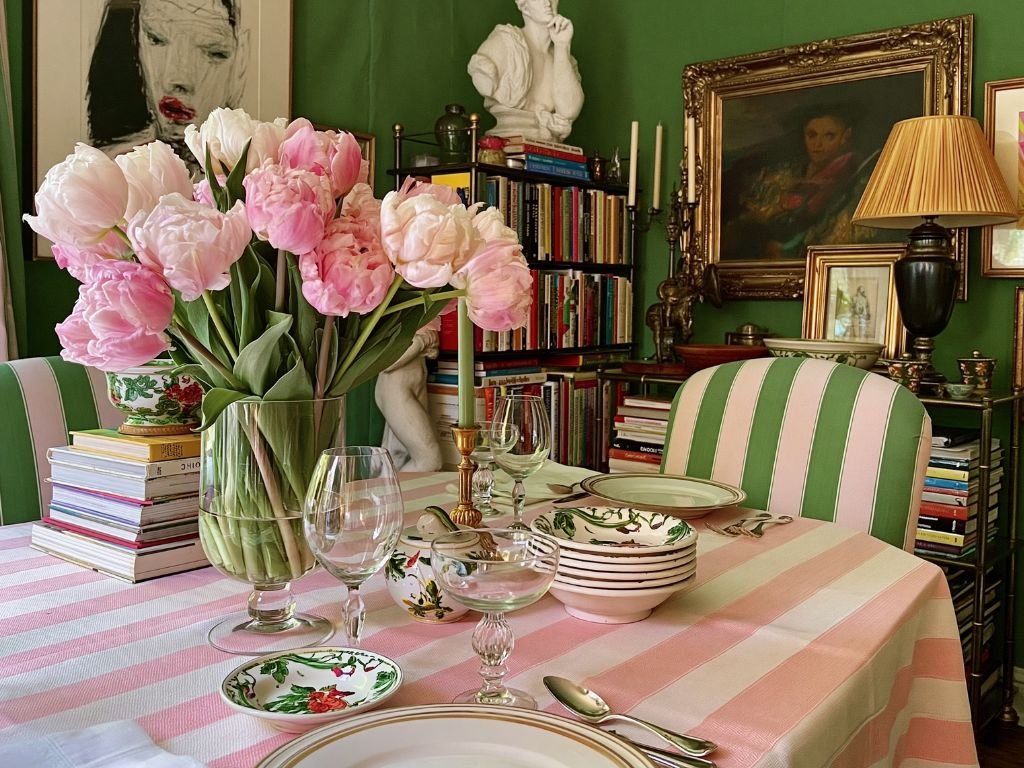
It cannot be purchased from a single catalogue, copied from a showroom, or replicated by following the latest decorating trend. Instead, it is shaped slowly through years of thoughtful choices, meaningful objects, and the quiet rituals that transform a house into a reflection of the people who live within it.
Unlike a perfectly decorated home, a collected home feels deeply personal.
Every room tells a story.
A landscape discovered while travelling. A favourite armchair inherited from family. Fresh flowers gathered on a Saturday morning. Books that have been read and reread. Artwork chosen not because it matched the walls, but because it stirred something lasting.
Nothing feels accidental, yet nothing appears overly planned.
This philosophy has defined many of Europe’s most admired homes for centuries. Walk through an English country house, a Parisian apartment, or an Italian villa, and you will notice that beauty rarely comes from perfection. Instead, it emerges through layers—objects gathered over time, materials that age gracefully, and interiors that quietly evolve with every passing season.
Perhaps this is why collected homes feel so inviting.
They do not ask to impress.
They invite you to stay.
Rather than filling every corner with decoration, they leave space for memories to accumulate naturally. Rooms become richer not because more objects are added, but because every object carries meaning.
A collected home also embraces the passage of time.
Linen becomes softer with every wash.
Oak develops a richer patina.
Books multiply across shelves.
Flowers change with the seasons.
Paintings become familiar companions that reveal something new each time the light shifts throughout the day.
Nothing is frozen in time.
Everything continues to evolve.
This approach stands in quiet contrast to today’s culture of instant transformation.
Social media often encourages complete room makeovers, perfectly coordinated interiors, and trends that change every season. Collected homes reject that sense of urgency.
They remind us that beauty cannot be rushed.
It is built patiently.
One carefully chosen piece at a time.
Perhaps the greatest misconception is that creating a collected home requires an unlimited budget or generations of inherited antiques.
In reality, it requires something far more valuable: intention.
A contemporary apartment can feel just as collected as a centuries-old manor when every object has been chosen thoughtfully and allowed to become part of the home’s story.
The goal is never to recreate someone else’s interior.
It is to compose your own.
That is why a collected home feels timeless.
It is not defined by a particular decorating style, architectural period, or colour palette.
It is defined by permanence.
By craftsmanship.
By curiosity.
By the belief that the most meaningful interiors are never finished—they simply become richer with every passing year.
Because a collected home is more than a beautifully decorated space.
It is a visual autobiography, written not with words, but with furniture, artwork, books, flowers, light, and the quiet moments of everyday living.
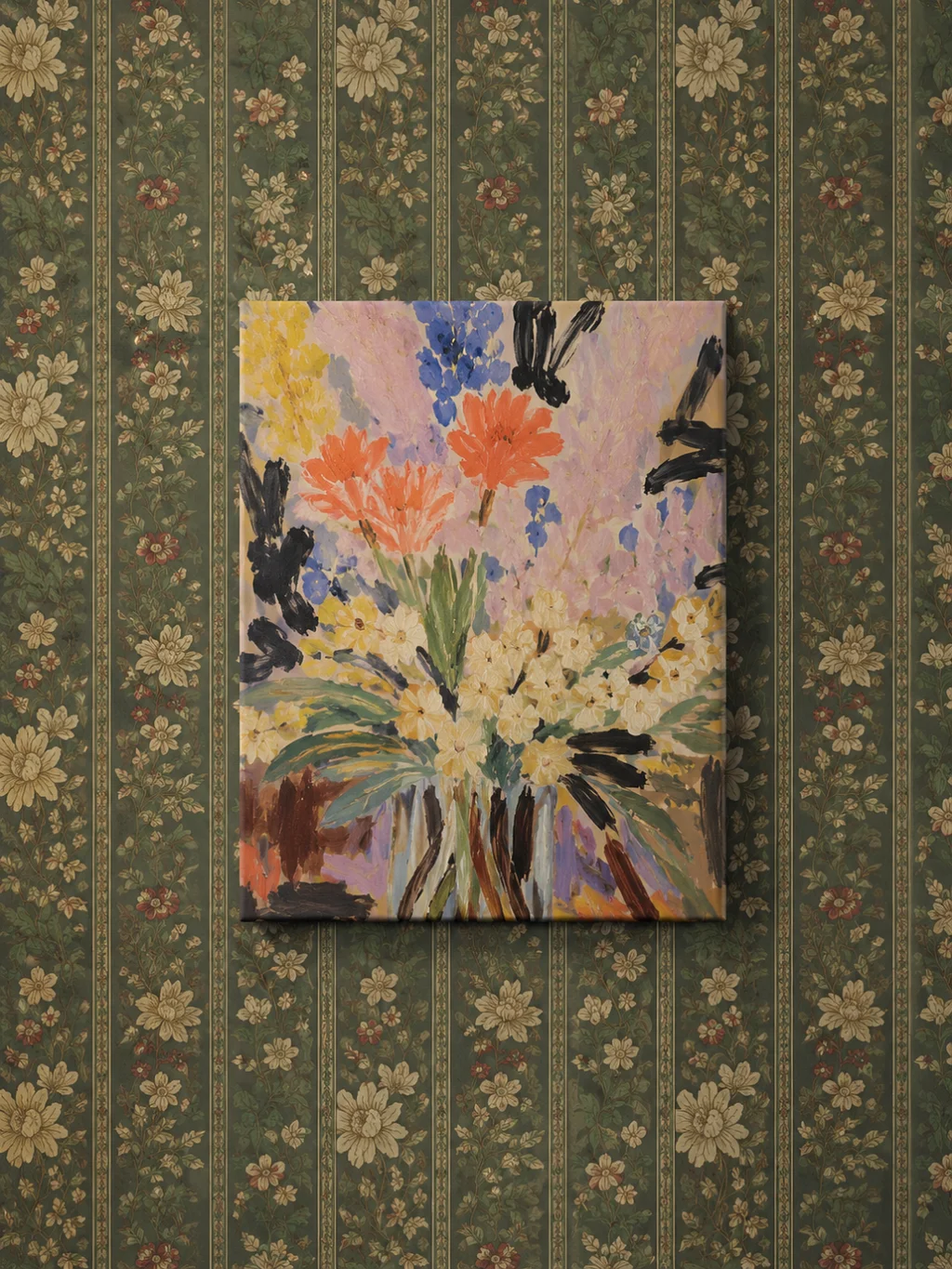
Botanical Arrangement
A timeless botanical arrangement inspired by collected interiors, layered florals and softly lived spaces. Designed to bring warmth, texture and quiet elegance into the home.
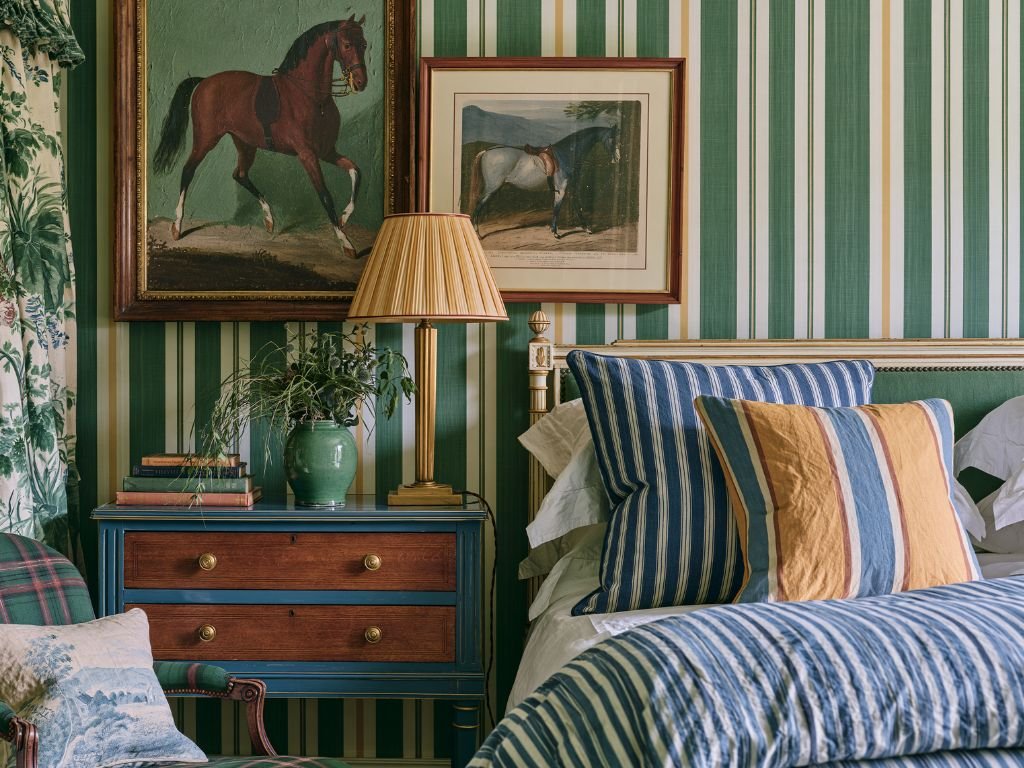
Why Collected Homes Feel More Beautiful Than Perfectly Decorated Homes
There is a quiet difference between a home that has been decorated and one that has been collected.
One immediately captures your attention.
The other quietly holds it.
Perfectly decorated homes often follow a carefully planned formula. Every cushion matches, every piece of furniture belongs to the same collection, and every object appears to have arrived on the very same day. They are visually impressive, yet they can sometimes feel static—beautiful to look at, but difficult to imagine living in.
Collected homes offer something entirely different.
They feel as though they have been lived with.
Nothing seems hurried.
Nothing feels forced.
Every room reflects years of curiosity, thoughtful choices, and a genuine appreciation for craftsmanship.
This is what gives collected homes their unmistakable sense of authenticity.
Rather than striving for perfection, they celebrate individuality.
An antique chest sits comfortably beside a contemporary sofa.
A modern lamp rests upon a centuries-old writing desk.
Fresh flowers soften weathered wood.
Books gathered over decades quietly fill open shelves.
Artwork becomes the thread that connects every object into a cohesive story.
These combinations are rarely planned all at once.
They emerge naturally over time.
Perhaps this is why collected homes feel so emotionally rich.
Every object carries a memory.
A ceramic bowl discovered while travelling.
A landscape painting that marked a new chapter in life.
A chair inherited from family.
A stack of well-loved books filled with handwritten notes.
These pieces are valued not simply for how they look, but for what they represent.
Their beauty grows alongside the memories attached to them.
Collected homes also understand something that trends often forget.
True elegance is rarely immediate.
Natural materials become more beautiful with age.
Linen softens after years of use.
Oak develops a deeper patina.
Brass loses its shine and gains character.
Leather acquires subtle marks that tell the story of everyday life.
Rather than hiding the passage of time, collected homes embrace it.
The home itself becomes part of the collection.
Another reason these interiors feel so inviting is that they leave room for discovery.
Your eye never settles in one place.
Instead, it moves naturally through layers of books, paintings, textiles, flowers, ceramics, and carefully chosen objects.
Each visit reveals another small detail that had gone unnoticed before.
This quiet complexity keeps a room interesting for years rather than months.
Perfectly decorated rooms often seek visual perfection.
Collected homes seek emotional resonance.
One impresses.
The other welcomes.
One follows a trend.
The other reflects a life.
This philosophy also changes the way we furnish our homes.
Instead of asking, “Does this match?”, we begin asking more meaningful questions.
“Will I still love this in twenty years?”
“Does this object tell part of my story?”
“Will this become more beautiful with time?”
These questions lead to entirely different decisions.
They encourage us to buy less, choose more carefully, and surround ourselves only with objects that bring lasting joy.
Perhaps the greatest beauty of a collected home is that it is never truly complete.
Every year adds another layer.
A new painting.
A handmade ceramic vase.
A favourite chair.
Fresh branches gathered from the garden.
A book that changes the way we see the world.
The home continues to grow alongside the people who live within it.
Because the most beautiful interiors are not created all at once.
They are composed patiently, one meaningful piece at a time.
That is the quiet beauty of collected living.
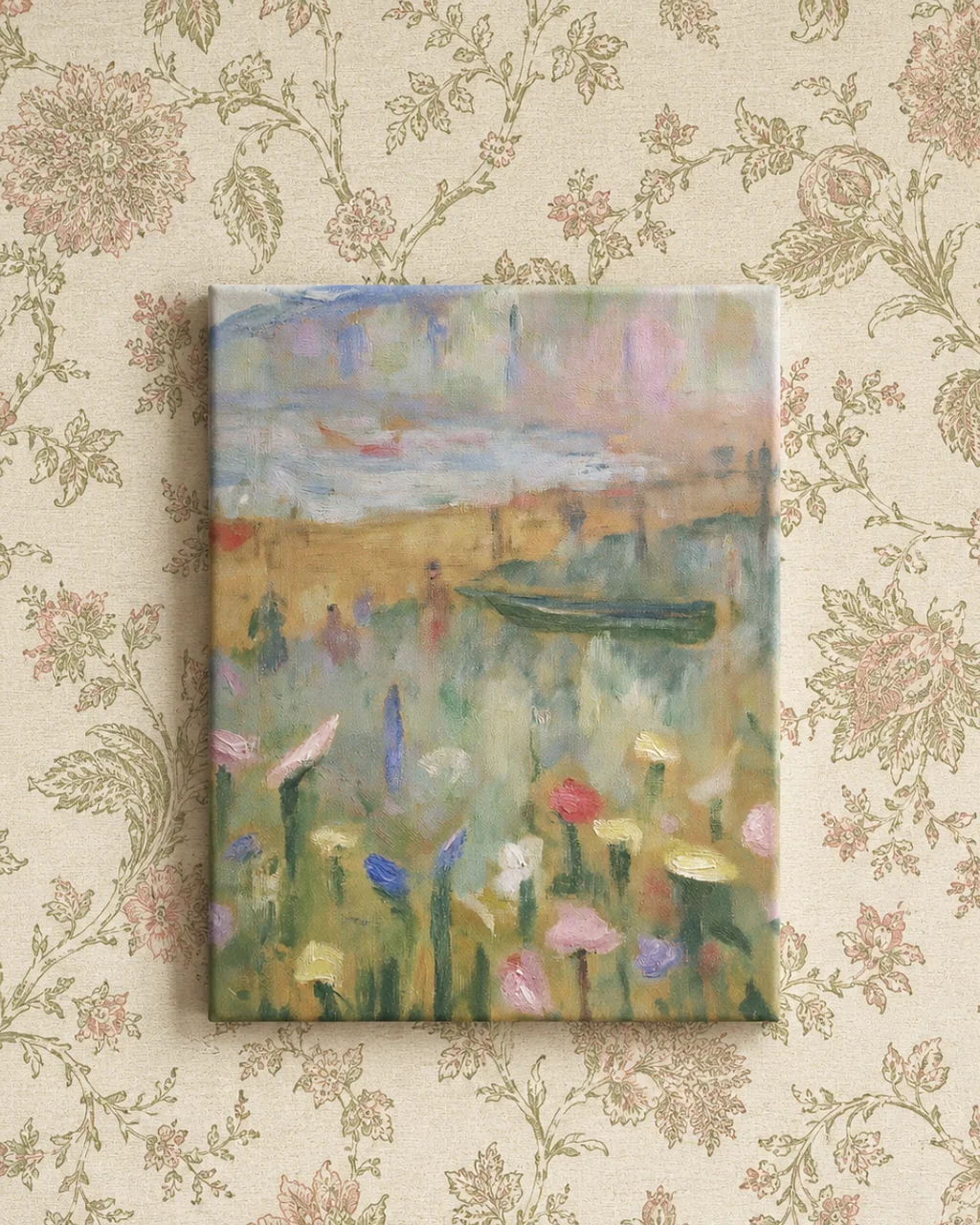
Pastel Coastal I
This painterly abstract floral composition blends soft coastal blues, gentle greens, blush pinks and warm ivory tones to create a sense of calm, light and effortless beauty. Inspired by blooming gardens, sea-washed landscapes and timeless European interiors, this piece brings a romantic yet sophisticated presence to a room. Designed for collected homes, quiet corners and thoughtfully curated spaces, it adds color, texture and a sense of serenity to everyday living.
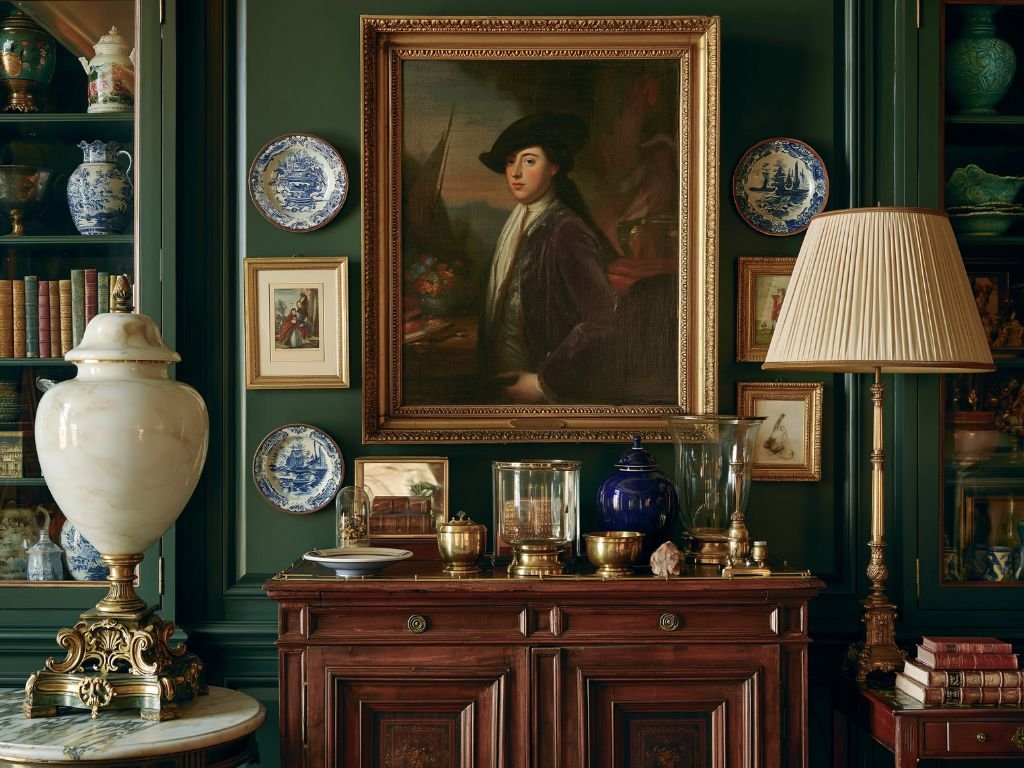
The History of Collected Living
Long before interior design became an industry, beautiful homes were created through a far simpler process.
People lived in them.
Rooms evolved gradually as generations added furniture, artwork, books, ceramics, and objects that reflected their lives. Nothing was chosen to impress strangers or satisfy changing trends. Every piece earned its place through usefulness, craftsmanship, or memory.
This quiet philosophy became one of Europe’s greatest decorating traditions.
Across England, country houses slowly filled with portraits, landscape paintings, antique furniture, and libraries assembled over centuries. Rather than replacing one generation’s taste with the next, families allowed each period to leave its mark. Georgian symmetry sat comfortably beside Victorian richness. Handmade textiles softened polished oak. Contemporary additions found their place alongside treasured heirlooms.
The result was never perfectly uniform.
Yet it always felt complete.
A similar story unfolded across France.
Provincial farmhouses and elegant Parisian apartments were never designed to resemble one another, but they shared a common approach to beauty. Rooms balanced practicality with refinement. Fresh flowers appeared on dining tables. Well-used ceramics stood beside silver inherited through generations. Paintings brought warmth to quiet walls, while natural light became part of the decoration itself.
Further south, Italian villas embraced a slower rhythm of living.
Stone floors worn smooth by time.
Linen curtains moving gently with the summer breeze.
Handmade pottery collected from local artisans.
Olive wood, marble, books, and paintings accumulated naturally, each reflecting a lifetime of experiences rather than a carefully planned design scheme.
Perhaps no tradition captures the spirit of collected living more beautifully than the Grand Tour.
Beginning in the seventeenth century and flourishing throughout the eighteenth, young aristocrats, artists, architects, and scholars travelled across Europe to study art, architecture, history, and craftsmanship.
They returned home carrying far more than souvenirs.
Landscape paintings.
Marble sculptures.
Ancient books.
Drawings.
Ceramics.
Textiles.
Furniture.
These carefully chosen objects became part of their homes, each one preserving the memory of a particular place, conversation, or discovery.
The home gradually became a personal archive of experiences.
This philosophy continues to shape many of Europe’s most admired interiors today.
The beauty of these homes does not come from strict historical accuracy.
Few remain untouched by time.
Instead, their character comes from continuity.
Every generation contributes something new while respecting what already exists.
A contemporary lamp may illuminate an eighteenth-century console.
Modern upholstery softens an antique armchair.
Fresh botanical arrangements sit beneath centuries-old portraits.
Nothing feels staged because nothing has been assembled overnight.
Collected living has always been about dialogue rather than decoration.
It allows different periods, cultures, materials, and memories to exist together without competing.
Each object enriches the next.
Each room becomes more interesting because it contains layers that cannot be replicated through a single shopping trip.
Today, this philosophy feels more relevant than ever.
In a world that constantly encourages instant transformation, collected living reminds us that the most meaningful homes are created slowly.
They reward patience over speed.
Craftsmanship over convenience.
Personal stories over passing trends.
Perhaps this is why collected homes never lose their appeal.
They remind us that a house is not simply furnished.
It is lived in.
It is shaped by the people who gather around the table, the books they read, the flowers they arrange, the journeys they take, and the artwork they choose to live alongside.
Because the finest interiors are not designed to capture a single moment.
They are designed to honour a lifetime.
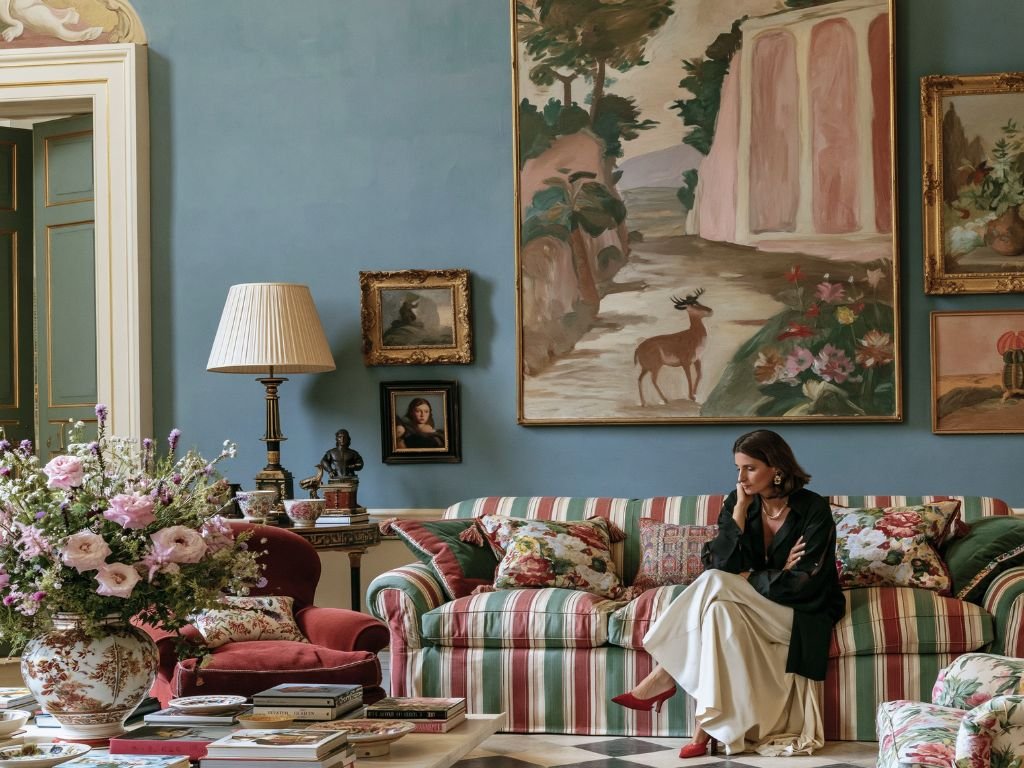
The Philosophy Behind a Collected Home
At its heart, a collected home is not about decoration.
It is about intention.
Every object, every material, every painting, and every quiet corner reflects a way of living rather than a particular design style. While trends encourage us to decorate quickly and move on to the next aesthetic, collected living asks something entirely different.
It asks us to slow down.
To choose carefully.
To surround ourselves only with things we truly wish to live alongside.
This philosophy has little to do with luxury and everything to do with meaning.
A collected home is not measured by the value of its furniture or the age of its antiques.
It is measured by the stories those objects carry.
A chair becomes beautiful because it has welcomed countless conversations.
A landscape painting becomes treasured because it reminds its owner of a particular journey.
A ceramic bowl becomes irreplaceable because it has sat at the centre of family dinners for years.
Objects become meaningful through the lives lived around them.
A Home as an Autobiography
Perhaps the most beautiful way to understand a collected home is to imagine it as a visual autobiography.
Every room quietly tells the story of the people who live there.
The books reveal their curiosity.
The artwork reflects what moves them.
The furniture speaks of comfort rather than fashion.
The flowers reveal an appreciation for the changing seasons.
Unlike a showroom, where every decision has been made by someone else, a collected home becomes impossible to replicate because no two lives unfold in exactly the same way.
The home becomes a portrait—not of wealth or status—but of character.
The Beauty of Slow Decorating
Collected homes are never rushed.
They reject the idea that an entire house must be completed before it can be enjoyed.
Instead, they embrace what might be called slow decorating.
One meaningful purchase this year.
Another discovery while travelling.
A painting that waits patiently until the perfect wall becomes available.
Fresh flowers gathered every weekend.
Books added one by one.
This gradual process allows every decision to feel intentional rather than impulsive.
Rather than asking, “What else does this room need?”, collected living asks,
“What deserves a place here?”
The difference is subtle, but it changes everything.
Craftsmanship Over Consumption
Collected homes celebrate objects that improve with age.
Solid oak.
Handmade ceramics.
Linen.
Brass.
Natural stone.
Oil paintings.
These materials develop character through daily life instead of deteriorating with it.
They invite repair rather than replacement.
Care rather than disposal.
The philosophy is simple.
Buy fewer things.
Choose better things.
Live with them longer.
Over time, the home becomes richer—not because it contains more, but because every object has earned its place.
Permanence Creates Timelessness
One of the defining characteristics of collected living is permanence.
Instead of decorating for the current season, collected homes are built for decades.
Every purchase is made with a longer horizon in mind.
Will this chair still feel beautiful in twenty years?
Will this painting continue to inspire me?
Will this table become part of family traditions?
When we begin asking these questions, trends naturally lose their importance.
Timelessness becomes the goal.
Beauty Lives in Everyday Rituals
Collected homes are shaped just as much by daily rituals as they are by furniture.
Fresh flowers arranged on a Monday morning.
Coffee enjoyed beside a favourite window.
Lighting candles before dinner.
Opening the windows on the first warm day of spring.
Reading before bed beneath the gentle glow of a table lamp.
These simple routines give meaning to the spaces we inhabit.
The house begins to feel alive because it is used with care and intention.
Architecture provides the setting.
Rituals provide the soul.
Living Intentionally
Ultimately, a collected home reflects a way of seeing the world.
It values patience over speed.
Craftsmanship over convenience.
Quality over quantity.
Meaning over perfection.
It reminds us that beautiful interiors are not created through endless consumption, but through thoughtful decisions repeated over many years.
Every object should contribute something beyond appearance.
A memory.
A story.
A sense of comfort.
A feeling of belonging.
Because the most timeless homes are never defined by what they contain.
They are defined by the life that unfolds within them.
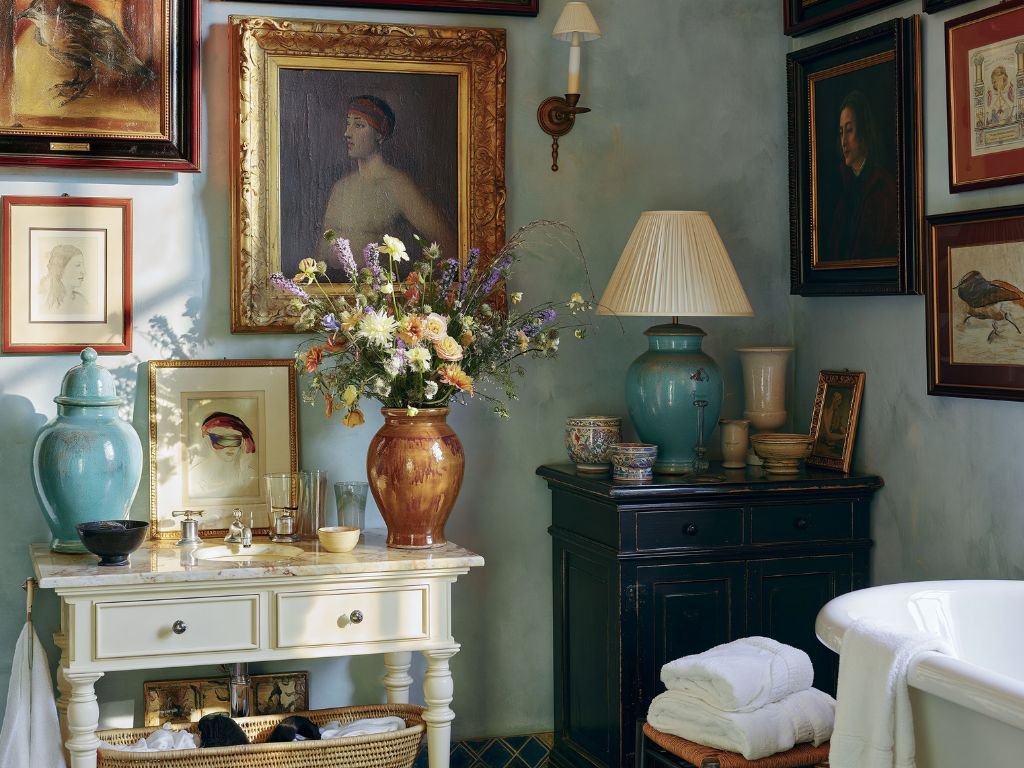
12 Characteristics of a Collected Home
Beautifully collected homes are instantly recognisable, yet surprisingly difficult to define.
It is not because they follow a particular decorating style, colour palette, or architectural period. Instead, they share a philosophy—a quiet way of living that values craftsmanship, patience, beauty, and the stories objects accumulate over time.
Whether found in an English country house, a Parisian apartment, an Italian villa, or a contemporary city home, collected interiors often share the same timeless characteristics.
These twelve principles form the foundation of collected living.
1. Nothing Is Purchased All at Once
Perhaps the defining characteristic of every collected home is that it evolves gradually.
There is no single shopping trip that completes the space.
Furniture arrives over many years.
Artwork is discovered unexpectedly.
Books slowly fill empty shelves.
Ceramics are gathered one by one.
Every addition feels intentional because every object has had time to find its place.
This gradual evolution creates a sense of authenticity that cannot be achieved overnight.
Collected homes remind us that patience is one of the most beautiful design tools we possess.
2. Every Object Has a Story
Objects become beautiful when they carry meaning.
A handmade bowl from a favourite journey.
A painting collected during an unforgettable season of life.
A chair inherited from grandparents.
A book filled with handwritten notes.
Collected homes value memory as much as appearance.
Instead of asking whether an object matches the room, they ask whether it deserves a place within it.
Over time, these stories become the true decoration.
3. Natural Materials Become More Beautiful With Age
Collected interiors embrace materials that improve rather than deteriorate over time.
Solid oak develops a richer patina.
Linen becomes softer with every wash.
Leather gains character through use.
Brass gently darkens.
Natural stone reveals subtle imperfections that make every surface unique.
Rather than hiding the passage of time, collected homes celebrate it.
Age is never considered a flaw.
It is evidence of a life well lived.
4. Books Are Part of the Decoration
Books do far more than fill shelves.
They reveal curiosity.
They introduce colour, texture, and personality.
Coffee table books invite conversation.
Well-loved novels rest beside favourite armchairs.
Design books quietly inspire future projects.
Collected homes display books because they are meant to be lived with, revisited, and shared.
A library, no matter how small, always makes a home feel richer.
5. Artwork Defines the Atmosphere
Artwork is rarely an afterthought.
It is often the emotional centre of the room.
A landscape painting brings calm.
A botanical composition introduces softness.
An equestrian portrait adds quiet strength.
A floral still life fills the room with colour long after fresh flowers have faded.
Rather than decorating empty walls, collected homes use artwork to establish mood, create balance, and tell stories that words cannot.
Every painting becomes another chapter within the home.
6. Flowers Are Always Present
Fresh flowers are one of the simplest expressions of collected living.
They remind us that beauty changes with the seasons.
A few garden roses.
Wild branches gathered during a morning walk.
Spring blossom arranged inside an old ceramic pitcher.
Hydrangeas drying gracefully as autumn approaches.
Flowers soften architecture, bring movement into still rooms, and quietly reconnect the home with the natural world.
Perhaps no decorative element feels more alive.
7. Antiques Live Beside Contemporary Pieces
Collected homes rarely belong to a single period.
Instead, they allow different generations of design to exist together naturally.
An antique writing desk beside a contemporary chair.
Modern lighting above a centuries-old console.
Handmade ceramics resting upon minimalist shelving.
These thoughtful contrasts create interiors that feel layered rather than themed.
History and modernity become partners rather than opposites.
8. Rooms Are Layered, Not Filled
There is an important difference between layering and clutter.
Collected homes understand restraint.
Every room contains visual depth without feeling overcrowded.
Books overlap gently with artwork.
Lamps introduce warm pools of light.
Textiles soften wood and stone.
Flowers bring movement.
Objects breathe.
Nothing competes for attention because every element supports the next.
Layering creates richness.
Clutter creates noise.
The two should never be confused.
9. Lighting Creates Mood
Lighting is one of the quietest yet most transformative elements of a collected home.
It shapes how a room is experienced far more than many people realise.
Collected interiors rarely rely on a single overhead fixture. Instead, they layer light throughout the home, allowing each source to contribute its own atmosphere.
A table lamp beside a favourite chair.
Wall sconces framing a painting.
Candles flickering across a dining table.
Morning sunlight filtering through linen curtains.
Picture lights gently illuminating a landscape at dusk.
Each layer changes the character of the room as the day unfolds.
Rather than striving for brightness, collected homes seek warmth.
The goal is not to illuminate every corner equally, but to create moments of intimacy that invite people to slow down and stay a little longer.
Beautiful lighting is rarely noticed consciously.
It is simply felt.
10. Imperfection Creates Authenticity
Collected homes never feel flawless.
And that is precisely what makes them beautiful.
A linen tablecloth gently creased after breakfast.
An old oak table bearing the marks of decades of family meals.
Books stacked imperfectly.
A ceramic vase made by hand, slightly irregular in shape.
Fresh flowers beginning to open.
These quiet imperfections remind us that the home is being lived in rather than preserved.
They bring warmth where perfection often creates distance.
Collected living embraces what the Japanese describe as the beauty of imperfection—not because flaws are desirable, but because they tell the story of time, craftsmanship, and everyday life.
The most memorable interiors never feel staged.
They feel honest.
11. Comfort Comes Before Perfection
A truly collected home is designed to be lived in.
Every chair invites conversation.
Every sofa encourages long afternoons with a book.
Every dining table welcomes friends and family to gather without ceremony.
Comfort is never sacrificed for appearance.
Beautiful interiors should never feel fragile or untouchable.
Instead, they should encourage everyday rituals.
Reading by the window.
Sharing meals.
Arranging flowers.
Listening to music.
Watching the changing light move across a favourite painting.
Collected homes understand that true luxury is not found in perfection.
It is found in ease.
When a home feels genuinely welcoming, beauty follows naturally.
12. The Home Never Stops Evolving
Perhaps the greatest characteristic of a collected home is that it is never truly finished.
There is no final moment when everything is complete.
Each year introduces another chapter.
A painting collected after a memorable journey.
A handmade ceramic bowl discovered at a local market.
A favourite chair reupholstered in linen.
A growing library.
Fresh flowers marking the arrival of spring.
The home continues to evolve because the people living within it continue to evolve.
Rather than chasing constant change, collected living embraces thoughtful growth.
Every new addition respects what already exists.
Nothing replaces the story.
It simply adds another page.
This philosophy transforms decorating into something much deeper.
The home becomes a lifelong project.
Not one driven by trends, but by memory.
Not by urgency, but by intention.
Because the most beautiful homes are never completed.
They are continually collected, quietly refined, and lovingly lived in.
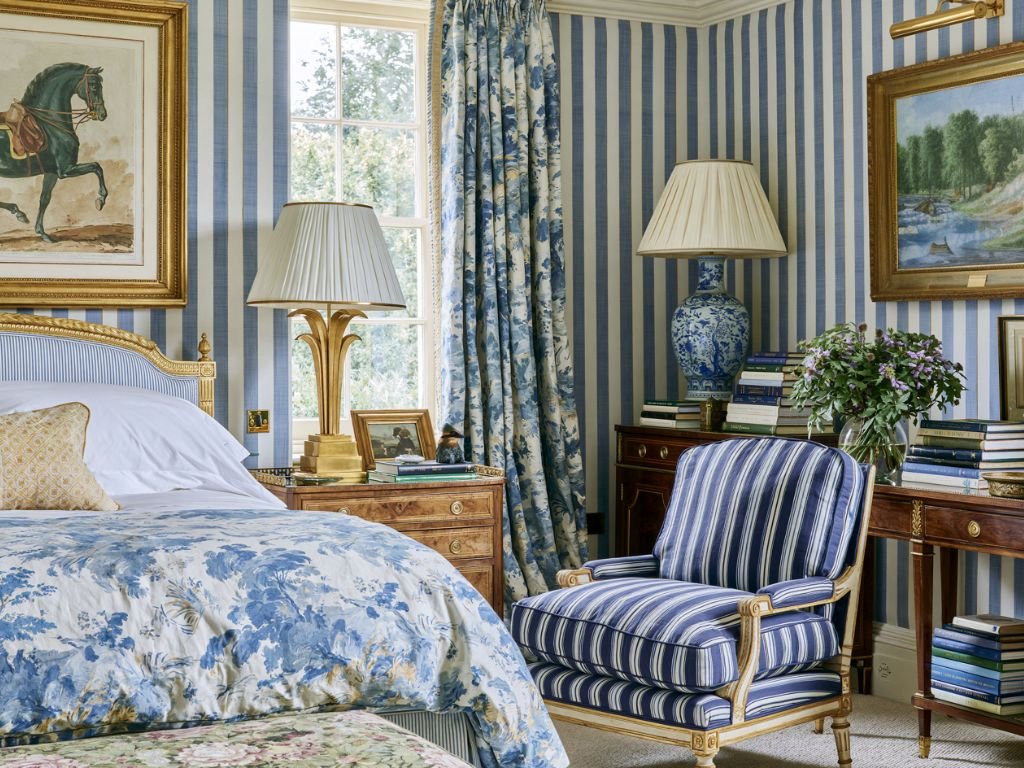
How to Start Creating a Collected Home
Creating a collected home does not begin with buying more.
It begins with seeing your home differently.
Many people assume collected interiors are the result of extraordinary budgets, inherited antiques, or decades of collecting. While time certainly adds richness, the true foundation of a collected home is not age—it is intention.
You can begin today.
Not by transforming every room overnight, but by changing the way you make each decision from this moment forward.
Collected living is less about decorating and more about editing.
It asks you to slow down.
To buy less.
To choose more carefully.
To allow your home to become a reflection of your life rather than a reflection of current trends.
Every meaningful object you introduce becomes another sentence in the story your home is telling.
These principles will help you begin.
Stop Buying Matching Furniture
One of the quickest ways to prevent a home from feeling collected is to purchase entire furniture collections at once.
Matching sofas, coffee tables, sideboards, and dining sets often create interiors that feel predictable rather than personal.
Collected homes evolve through contrast.
An antique cabinet beside a contemporary sofa.
A handcrafted wooden stool beneath a modern console.
A traditional armchair paired with minimalist lighting.
Different periods create dialogue.
Different materials create depth.
Instead of asking whether everything matches perfectly, ask whether each piece contributes something unique.
The most beautiful rooms rarely feel coordinated.
They feel composed.
Invest Slowly
Collected homes reward patience.
Rather than replacing an entire room in a single season, focus on one meaningful addition at a time.
Perhaps this year it is a beautifully crafted dining table.
Next year, a landscape painting.
Later, a pair of antique brass candlesticks discovered while travelling.
Every purchase becomes more intentional when there is space between decisions.
This slower approach also allows your taste to mature.
Instead of following temporary trends, you begin recognising what you truly wish to live alongside for decades.
Collected homes are built through consistency, not speed.
Choose Meaningful Artwork
Artwork is one of the most powerful ways to establish the atmosphere of a home.
Unlike decorative accessories that may come and go, a painting often remains with us for years, quietly becoming part of our everyday lives.
Choose artwork that continues to move you every time you see it.
A landscape that brings calm.
A botanical composition filled with quiet elegance.
A floral arrangement that introduces warmth throughout every season.
An equestrian painting that reflects strength and grace.
Rather than asking whether a painting matches your furniture, ask whether you can imagine living with it for many years to come.
The best artwork becomes part of the home’s identity.
It quietly shapes every room around it.
Discover timeless canvas prints designed for beautifully collected homes.
Collect While Travelling
Some of the most meaningful objects are discovered far from home.
A handmade ceramic bowl from a small village.
An antique print found in a local bookshop.
A woven basket from a countryside market.
A linen tablecloth purchased during a memorable journey.
These objects carry something no mass-produced decoration ever can.
Memory.
Every time you see them, they remind you of a particular place, conversation, season, or experience.
Collected homes become richer because they preserve moments rather than simply displaying possessions.
Travel, when approached this way, becomes part of the decoration itself.
Display Books With Intention
Books are among the most personal decorative objects a home can contain.
They reveal curiosity.
They introduce texture and colour.
They invite conversation without saying a word.
Rather than hiding books inside cabinets, allow them to become part of the room.
Stack several on a coffee table.
Fill open shelves gradually.
Lean one beside a favourite chair.
Mix design books with novels, biographies, travel journals, and poetry.
A collected library should never feel styled.
It should feel read.
Bring Nature Indoors
Collected homes maintain a constant relationship with the natural world.
Fresh flowers.
Garden branches.
Seasonal foliage.
Fruit resting inside a ceramic bowl.
Natural stone.
Wood.
Linen.
These quiet elements soften architecture and remind us that beauty changes throughout the year.
Nature introduces movement into otherwise still rooms.
As flowers bloom, fade, and are replaced, the home subtly evolves alongside the seasons.
Even the smallest branch gathered during a morning walk can completely transform the atmosphere of a room.
Mix Different Periods
Beautiful homes rarely belong to a single era.
Collected interiors allow different generations of design to coexist naturally.
A contemporary dining table beneath an antique chandelier.
A modern sofa paired with a centuries-old chest.
Minimalist lighting beside traditional artwork.
These contrasts prevent interiors from feeling either overly historic or excessively modern.
The dialogue between different periods creates richness that cannot be achieved through uniformity.
History becomes part of everyday life.
Leave Empty Space
Perhaps the most overlooked element of collected living is restraint.
Not every wall needs artwork.
Not every shelf needs decoration.
Not every surface needs to be filled.
Empty space allows beautiful objects to breathe.
It draws attention to craftsmanship.
It creates calm.
It gives the eye somewhere to rest before discovering the next meaningful detail.
Collected homes understand that elegance often comes not from adding more, but from knowing when to stop.
The finest interiors never feel crowded.
They feel balanced.
Because every meaningful object deserves the space to be truly appreciated.
The Essential Elements of Every Collected Home
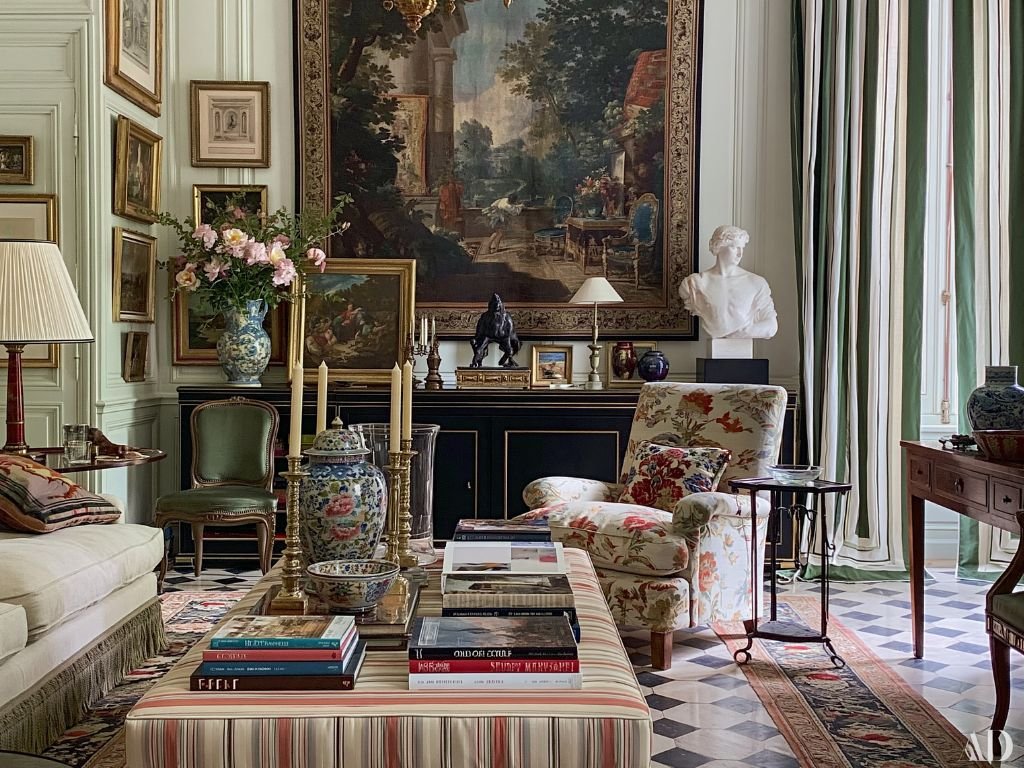
While every collected home is unique, certain elements appear again and again throughout the world’s most memorable interiors.
Not because they follow a decorating formula, but because they quietly contribute warmth, permanence, and personality.
A beautifully collected home is rarely defined by one spectacular object.
Instead, it is shaped by many thoughtful layers working together.
Furniture provides comfort.
Artwork establishes atmosphere.
Books reveal curiosity.
Flowers introduce life.
Lighting creates mood.
Natural materials add authenticity.
Every element supports the next, creating spaces that feel harmonious rather than perfectly coordinated.
These are the essential ingredients found in homes that continue to grow more beautiful with time.
Furniture
Furniture forms the foundation of every collected home.
Rather than filling rooms with matching collections, collected interiors bring together pieces acquired over many years.
A beautifully upholstered sofa.
A weathered oak dining table.
An antique writing desk.
A handcrafted bench.
A comfortable armchair positioned beside a favourite window.
Every piece is chosen not only for its appearance, but for the role it plays in everyday life.
Collected homes value furniture that invites use.
Wood develops character.
Leather softens.
Linen becomes increasingly beautiful.
The furniture grows alongside the people who live with it.
Instead of asking whether every piece belongs to the same collection, collected living asks whether every piece belongs to the same story.
Artwork
Artwork is often the emotional heart of a collected home.
Long before guests notice individual pieces of furniture, they feel the atmosphere created by the paintings on the walls.
A botanical composition introduces quiet elegance.
A landscape painting creates calm.
A floral still life brings colour into every season.
An equestrian portrait adds dignity and strength.
Artwork should never be chosen simply because it matches a colour palette.
Instead, it should reflect something personal.
A memory.
A feeling.
A place.
A lifelong fascination.
Collected homes live alongside artwork for decades.
The paintings become familiar companions, revealing something new each time the light changes throughout the day.
Beautiful artwork is not decoration.
It becomes part of the family’s history.
Lighting
Lighting determines how every other element is experienced.
Without thoughtful lighting, even the most beautifully designed room can feel flat.
Collected homes rely on layers rather than brightness.
Morning sunlight filtering through linen curtains.
A table lamp illuminating an evening conversation.
Wall sconces framing artwork.
Candles glowing during dinner.
Picture lights revealing the texture of an oil painting.
Each source contributes another layer of atmosphere.
Rather than lighting the room evenly, collected interiors create moments of warmth throughout the home.
The finest lighting is rarely noticed.
It is simply felt.
Textiles
Textiles soften architecture and introduce comfort into every room.
Linen curtains.
Wool throws.
Velvet cushions.
Cotton bedding.
Handwoven rugs.
Rather than matching every fabric perfectly, collected homes embrace variation.
Different textures.
Different weaves.
Different histories.
Natural fibres become increasingly beautiful with age, developing softness and character through everyday life.
Textiles should never feel precious.
They should invite touch.
Books
Books are among the most personal objects a home can contain.
They quietly reveal interests, memories, and lifelong curiosities.
Collected homes display books because they are meant to be enjoyed, revisited, and shared.
A growing library reflects a growing life.
Design books rest beside novels.
Travel journals accompany biographies.
Poetry sits comfortably alongside gardening books.
Books create visual rhythm while reminding us that beautiful homes are shaped as much by ideas as by objects.
Flowers
Fresh flowers are perhaps the simplest expression of collected living.
They connect the home with the changing seasons.
Garden roses in early summer.
Hydrangeas in autumn.
Blossoming branches in spring.
Simple greenery gathered during a morning walk.
Flowers introduce movement into still rooms.
They soften furniture.
They brighten quiet corners.
They remind us that beauty is constantly changing.
Collected homes rarely wait for special occasions.
Flowers belong to everyday life.
Ceramics
Handmade ceramics introduce warmth that manufactured perfection rarely achieves.
A simple bowl.
A handcrafted vase.
A stoneware pitcher.
An irregular serving platter.
Each piece carries the subtle marks of the artisan who created it.
Slight imperfections become part of their beauty.
Collected homes favour objects made by human hands because they introduce individuality into everyday rituals.
Even the simplest breakfast feels different when served from a bowl that carries its own quiet story.
Antiques
Antiques provide continuity between generations.
They remind us that beautiful objects can continue serving new lives long after they were first created.
An antique mirror.
A Georgian chest.
A Victorian side table.
A carved wooden stool.
Collected homes rarely use antiques to recreate the past.
Instead, they allow them to coexist naturally with contemporary living.
History becomes part of the present rather than something preserved behind glass.
Colour Palette
Collected homes favour colours that remain beautiful for decades rather than seasons.
Warm ivory.
Stone.
Sage green.
Olive.
Dusty blue.
Soft terracotta.
Natural oak.
Muted burgundy.
These colours rarely dominate a room.
Instead, they create a calm foundation upon which furniture, artwork, flowers, and natural materials can quietly shine.
Timeless colour palettes allow the home to evolve naturally without requiring constant change.
Fragrance
Perhaps the most overlooked element of a collected home is one that cannot be seen.
Fragrance.
The scent of fresh flowers.
Linen dried in the open air.
Old books.
Polished wood.
Beeswax candles.
A pot of coffee in the morning.
Branches of eucalyptus resting inside a ceramic vase.
These subtle scents become part of the memory of a home.
Long after we leave, we often remember how a beautiful house felt—and how it smelled.
Collected homes engage every sense.
Not only through what they display, but through the quiet atmosphere they create each day.
Together, these elements form something far greater than decoration.
They create a home that feels warm, deeply personal, and timeless—a place that continues to grow richer with every passing year.
Decorating Room by Room
A collected home is never created by following the same formula in every room.
Each space serves a different purpose.
The living room encourages conversation.
The bedroom offers rest.
The dining room brings people together.
The kitchen celebrates everyday rituals.
A hallway creates the first impression.
A home office becomes a place of quiet focus.
While every room has its own rhythm, they should all share the same philosophy.
Thoughtful layering.
Natural materials.
Timeless artwork.
Objects collected over time.
A sense of warmth that cannot be purchased all at once.
Rather than decorating each room independently, collected homes allow one story to flow naturally throughout the entire house.
Every space feels connected without ever feeling identical.
Living Room
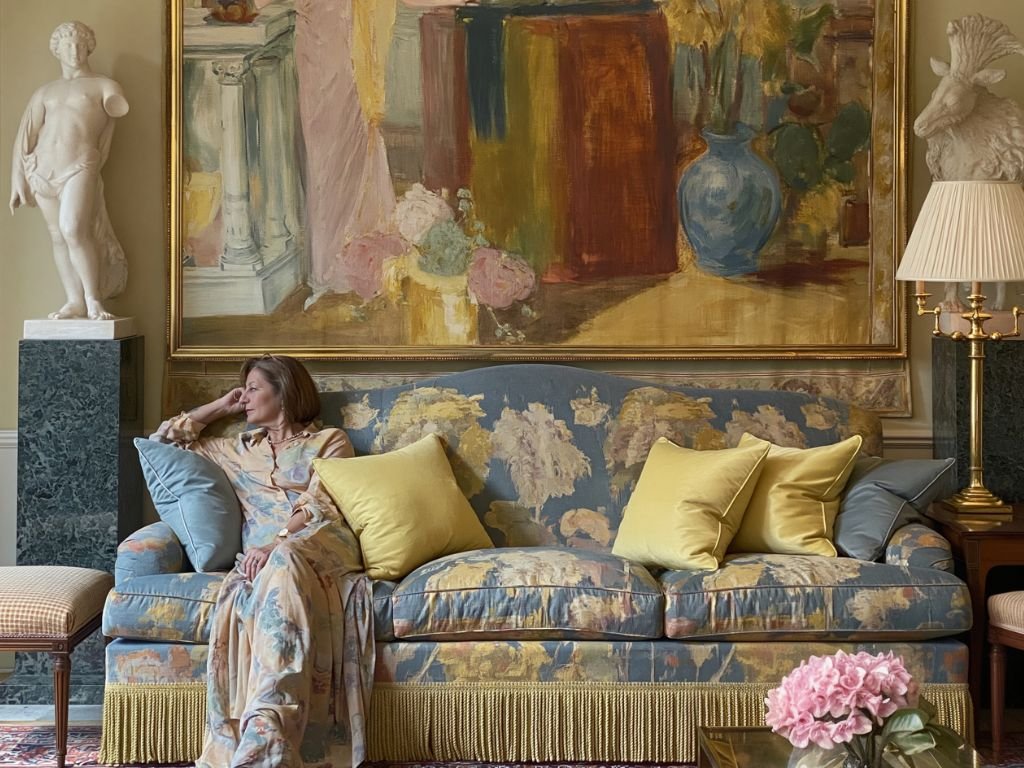
The living room is often the heart of a collected home.
It is where conversations unfold, books accumulate, flowers are arranged, and artwork quietly shapes the atmosphere.
Rather than filling the room with furniture, begin by creating places where people naturally want to gather.
A generous sofa.
Comfortable armchairs.
A coffee table layered with books, ceramics, and seasonal flowers.
Soft lighting from table lamps instead of harsh ceiling fixtures.
Artwork should establish the emotional tone of the room.
A landscape above the fireplace.
A botanical painting above a console.
A floral composition introducing colour throughout every season.
Collected living rooms never feel overly styled.
They feel comfortably inhabited.
As though someone has just stepped away with a cup of coffee, leaving behind a book opened halfway through its pages.
Bedroom
The bedroom should feel like the quietest room in the house.
Collected bedrooms embrace softness rather than decoration.
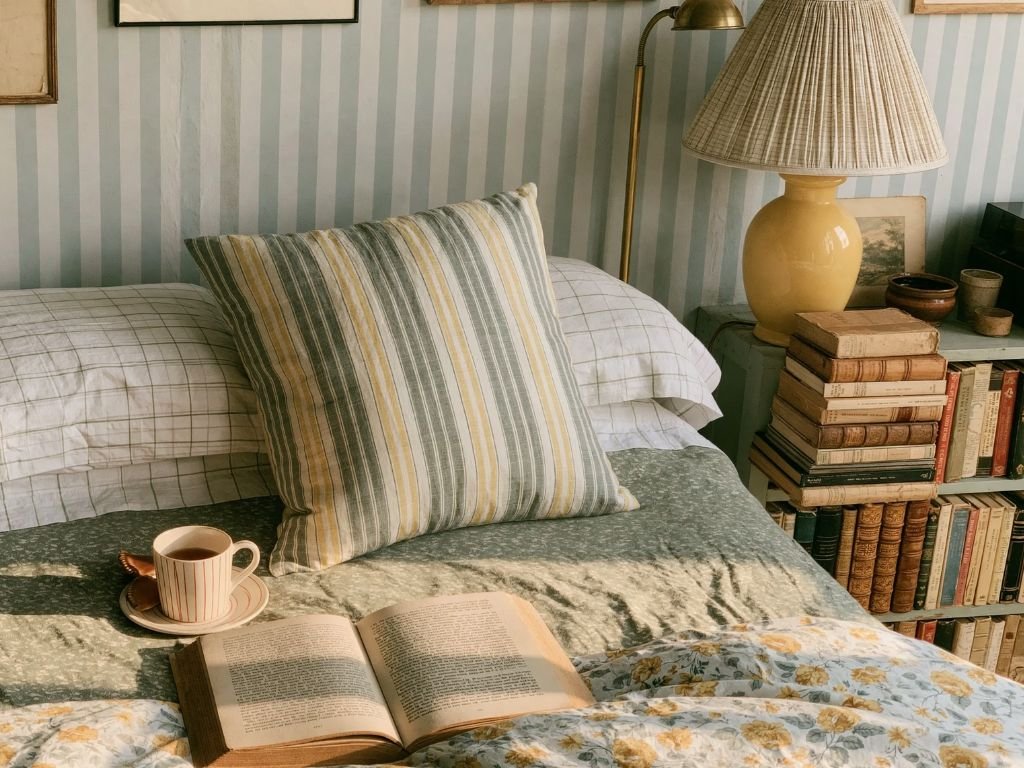
Natural linen bedding.
Warm lighting.
Books beside the bed.
A ceramic vase holding fresh branches.
A painting chosen for the feeling it creates rather than the colours it contains.
Avoid unnecessary furniture.
Allow every object to contribute calm.
Layer textures instead of accessories.
The goal is not visual perfection but emotional comfort.
A collected bedroom should welcome the beginning and the end of every day with the same quiet elegance.
Dining Room
The dining room is where collected living becomes most visible.
It is shaped not only by furniture but by the rituals that unfold around it.
A solid wooden table becomes more beautiful with every shared meal.
Linen tablecloths soften with time.
Candles create atmosphere long before dinner begins.
Fresh flowers mark the changing seasons.
Artwork introduces warmth while encouraging conversation.
Rather than saving beautiful objects for special occasions, collected homes believe everyday meals deserve beauty too.
Because ordinary moments often become the memories we treasure most.
Kitchen
A collected kitchen values usefulness as much as beauty.
Open shelves displaying everyday ceramics.
Wooden cutting boards worn smooth through years of cooking.
Stoneware bowls filled with seasonal fruit.
Fresh herbs growing beside the window.
Linen towels casually folded.
Beautiful kitchens are rarely the most expensive.
They are the most lived in.
Every object earns its place through daily use.
Nothing feels decorative for decoration’s sake.
Everything contributes to the rhythm of everyday life.
Hallway
The hallway quietly introduces the story of the home.
It offers the first impression while hinting at everything still to come.
A carefully chosen painting.
A console layered with books.
Fresh flowers greeting arriving guests.
A lamp creating warmth during the evening.
An antique mirror reflecting natural light.
Collected hallways never feel empty.
Nor do they feel crowded.
They simply invite curiosity.
The entrance becomes the first chapter of the home’s story.
Home Office
A collected workspace should encourage clarity rather than distraction.
A beautifully crafted desk.
Comfortable seating.
Shelves filled with books that inspire new ideas.
Artwork that encourages reflection rather than demanding attention.
Natural light whenever possible.
Fresh flowers introducing life into the room.
Rather than filling the office with technology alone, collected homes balance productivity with beauty.
Because the spaces where we think deserve the same care as the spaces where we rest.
Every room within a collected home has its own purpose.
Yet together they create something larger than individual spaces.
They create continuity.
A sense that every object belongs.
Every room reflects the same values.
Patience.
Craftsmanship.
Comfort.
Curiosity.
And the quiet belief that the most beautiful homes are not decorated all at once.
They are composed, one meaningful room at a time.
10 Common Mistakes That Prevent a Home From Feeling Collected
Collected homes appear effortless, but they are rarely accidental.
Their beauty comes not only from the decisions that were made, but also from the decisions that were deliberately avoided.
Many interiors fail to feel collected not because they lack beautiful furniture or expensive finishes, but because they prioritise perfection over personality, speed over patience, and trends over timelessness.
Avoiding these common mistakes will allow your home to grow naturally, developing the quiet richness that defines truly collected interiors.
1. Buying Everything at Once
Perhaps the most common mistake is trying to complete an entire room in a single weekend.
A matching dining set.
Matching bedside tables.
Matching accessories.
Matching artwork.
Although everything coordinates perfectly, the room often lacks depth and individuality.
Collected homes evolve gradually.
Furniture arrives over time.
Artwork is discovered unexpectedly.
Books accumulate naturally.
Every new addition has space to become part of the home’s story.
Patience creates authenticity.
Speed rarely does.
2. Decorating for Trends Instead of Yourself
Trends are designed to change.
Collected homes are designed to endure.
When every purchase is influenced by the latest colour palette or decorating movement, the home quickly begins to feel dated.
Instead, choose pieces that continue to inspire you regardless of current fashion.
A timeless landscape.
A favourite armchair.
Handmade ceramics.
Natural linen.
Solid wood.
Objects selected with care rarely lose their relevance.
Because personal taste always outlasts temporary trends.
3. Choosing Furniture Before Choosing Artwork
Many people leave artwork until the very end of the decorating process.
Collected homes often do the opposite.
Artwork establishes the atmosphere of a room long before decorative accessories are introduced.
A painting influences colour.
Lighting.
Mood.
Texture.
Even the arrangement of furniture.
Rather than asking which artwork matches the room, allow the artwork to become the reason the room exists.
Beautiful interiors are often built around a single meaningful painting.
4. Filling Every Empty Space
Not every wall requires artwork.
Not every shelf requires decoration.
Not every table needs accessories.
Collected homes understand that empty space is part of the composition.
Negative space allows important objects to breathe.
It creates calm.
It gives the eye somewhere to rest.
Restraint often feels more luxurious than abundance.
The most elegant rooms are rarely the busiest.
5. Buying Poor Quality Instead of Buying Slowly
Collected living is not about owning more.
It is about owning better.
Rather than purchasing many inexpensive decorative objects, invest in fewer pieces that improve with age.
Solid wood instead of veneer.
Natural linen instead of synthetic fabric.
Handmade ceramics instead of mass-produced accessories.
Timeless artwork instead of temporary decoration.
Quality creates permanence.
Permanence creates beauty.
6. Ignoring the Importance of Lighting
Even beautifully designed rooms can feel cold beneath poor lighting.
Collected homes layer light carefully throughout the day.
Natural daylight.
Table lamps.
Picture lights.
Candles.
Wall sconces.
Every source contributes warmth and atmosphere.
Lighting should shape emotion rather than simply illuminate the room.
It is one of the quietest yet most powerful elements of timeless interiors.
7. Treating Books as Storage Instead of Decoration
Books are not clutter.
They are among the most personal decorative elements a home can contain.
They reveal curiosity.
Experience.
Interests.
Memories.
Collected homes display books proudly.
On coffee tables.
Open shelves.
Bedside tables.
Writing desks.
A growing library quietly tells the story of the people who live there.
8. Forgetting About Nature
Collected interiors maintain a constant relationship with the outdoors.
Fresh flowers.
Garden branches.
Seasonal fruit.
Natural wood.
Stone.
Linen.
These simple elements soften architecture and prevent rooms from feeling static.
Nature introduces movement.
It reminds us that beautiful homes continue changing throughout the seasons.
Without these living elements, interiors can easily begin to feel overly styled.
9. Trying to Recreate Someone Else’s Home
Perhaps the greatest misunderstanding of collected living is believing it can be copied.
It cannot.
Collected homes reflect individual lives.
Different journeys.
Different memories.
Different curiosities.
The goal is never to recreate a photograph from a magazine.
It is to build a home that could belong to no one else.
The most memorable interiors always feel personal.
That is precisely what makes them timeless.
10. Believing a Home Is Ever Finished
Collected homes reject the idea of completion.
There is always another story waiting to be added.
Another book.
Another painting.
Another journey.
Another season of flowers.
The home continues to evolve because life continues to evolve.
This quiet openness is what keeps collected interiors feeling alive.
They are never frozen in time.
They simply become richer, warmer, and more meaningful with every passing year.
Because the goal of collected living has never been to create a perfect home.
It has always been to create a home worth growing old in.
Frequently Asked Questions About Creating a Collected Home
About
What is a collected home?
A collected home is an interior that evolves gradually through thoughtful choices rather than instant decoration. Instead of being designed all at once, it is shaped over time by meaningful furniture, timeless artwork, books, natural materials, and objects that reflect the lives of the people who live there. A collected home feels personal, layered, and beautifully lived in.
What makes a home feel collected?
A collected home is defined by intention rather than perfection.
It combines different periods of furniture, meaningful artwork, natural materials, layered lighting, fresh flowers, books, and handcrafted objects that have been gathered over many years.
The goal is not to create a perfectly coordinated interior but a home that quietly tells a story.
Can a modern apartment become a collected home?
Absolutely.
Collected living is a philosophy rather than an architectural style.
A contemporary apartment can feel every bit as warm and timeless as a centuries-old country house when it is filled with thoughtfully chosen furniture, meaningful artwork, natural textures, and objects collected over time.
Character is created through how we live—not simply by the age of the building.
How long does it take to create a collected home?
There is no finish line.
Collected homes continue evolving throughout a lifetime.
Some of the most beautiful interiors have been shaped over decades, with every year adding another layer of personality.
The beauty of collected living lies precisely in the fact that it is never complete.
Can I create a collected home on a budget?
Yes.
Collected living is not about spending more.
It is about choosing more carefully.
Vintage shops, antique markets, independent artisans, second-hand bookshops, handmade ceramics, and timeless artwork often contribute far more character than buying an entire room of new furniture.
Patience is far more valuable than budget.
Can I mix IKEA with antiques?
Absolutely.
One of the defining characteristics of collected homes is the thoughtful combination of old and new.
A contemporary bookcase may sit comfortably beside an antique chest.
A minimalist sofa may be softened by vintage textiles and traditional artwork.
The contrast creates richness while preventing interiors from feeling overly staged.
Should everything match?
Not at all.
Collected homes celebrate harmony rather than uniformity.
Different wood tones.
Different periods.
Different textures.
Different stories.
When every object has been chosen thoughtfully, a room naturally feels cohesive without appearing perfectly matched.
How much artwork should I have?
There is no universal rule.
Some homes feature large statement paintings.
Others rely on smaller works collected over many years.
The most important consideration is choosing artwork that creates atmosphere and reflects your personal taste rather than simply filling empty walls.
A single meaningful painting often contributes more than several decorative pieces chosen only to match the room.
What type of artwork works best in a collected home?
Timeless subjects naturally complement collected interiors.
Landscape paintings.
Botanical studies.
Floral still lifes.
Equestrian art.
Classical portraits.
These works introduce atmosphere rather than following temporary decorating trends.
Choose artwork you can imagine living with for decades.
Which colours create a timeless interior?
Collected homes tend to favour colours inspired by nature.
Warm ivory.
Stone.
Sage green.
Olive.
Dusty blue.
Soft terracotta.
Natural oak.
Muted burgundy.
These palettes remain elegant regardless of changing trends while allowing artwork and collected objects to become the focus.
How important are books in a collected home?
Books are one of the defining characteristics of collected living.
They reveal curiosity, introduce texture, encourage conversation, and quietly reflect the personality of the people who live there.
A growing library often becomes one of the most beautiful decorative elements within the home.
Do collected homes have to include antiques?
No.
Antiques certainly add history and character, but they are not essential.
Collected homes are defined by meaningful choices rather than historical objects.
Contemporary furniture, handmade ceramics, modern artwork, and carefully chosen accessories can create exactly the same feeling when combined thoughtfully.
Why do collected homes never go out of style?
Collected homes are built upon timeless principles rather than seasonal trends.
They prioritise craftsmanship over convenience.
Quality over quantity.
Permanence over novelty.
Because they reflect personal stories rather than temporary fashions, they continue feeling relevant year after year.
How do I begin creating a collected home?
Begin slowly.
Choose one meaningful piece at a time.
Invest in quality furniture.
Display books you genuinely love.
Bring fresh flowers into your home regularly.
Collect artwork that resonates with you.
Allow every room to evolve naturally rather than trying to complete everything immediately.
Collected living is a lifelong journey, not a weekend project.
Where can I find timeless artwork for a collected home?
At House of Sun Editions, we curate premium gallery-wrapped canvas prints designed for homes that value timeless beauty over passing trends.
Our collections celebrate botanical compositions, landscapes, floral arrangements, equestrian subjects, and other enduring themes that bring warmth, atmosphere, and character into beautifully collected interiors.
Whether you’re beginning your first room or adding the next chapter to a home you’ve been shaping for years, timeless artwork becomes one of the most meaningful pieces you can collect.
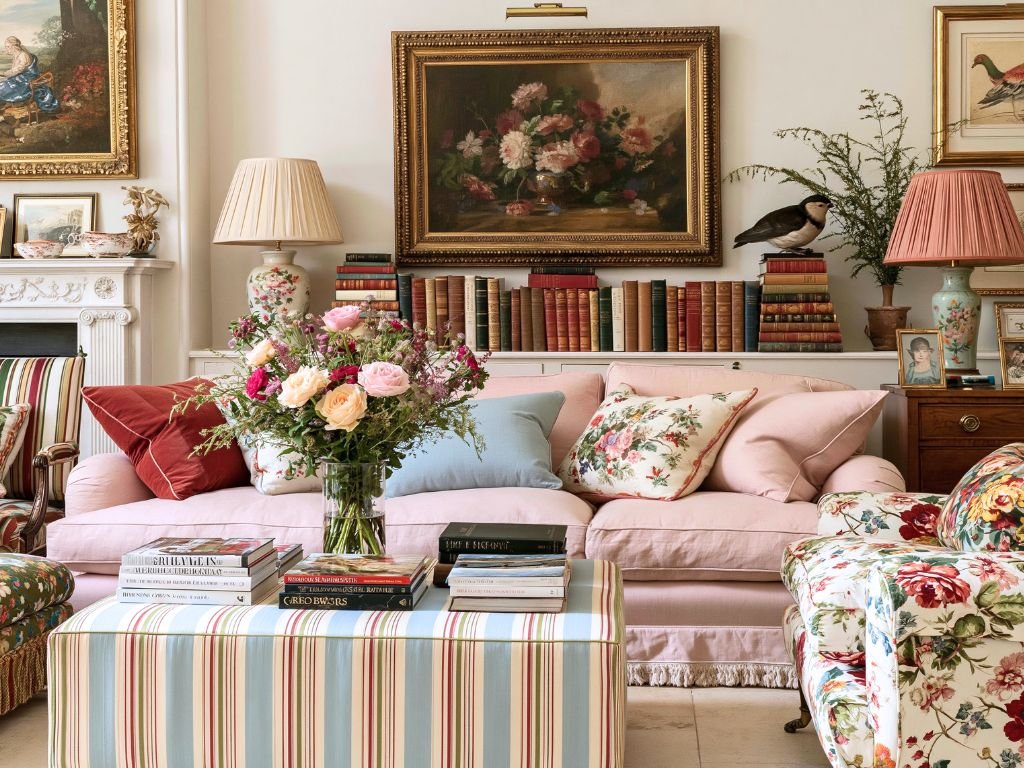
Conclusion
A collected home is never created in a single moment.
It is shaped quietly through hundreds of thoughtful decisions—some made intentionally, others almost without noticing.
A painting that immediately feels familiar.
A chair that becomes everyone’s favourite place to read.
Books that slowly fill empty shelves.
Fresh flowers gathered on an ordinary morning.
Linen that grows softer with every passing year.
These are the moments that give a home its character.
Not because they are extraordinary, but because they become part of everyday life.
Perhaps this is why collected homes continue to resonate across generations.
They remind us that beauty does not come from owning more.
It comes from choosing well.
From living slowly enough to appreciate craftsmanship.
From surrounding ourselves with objects that continue to bring meaning long after the excitement of buying them has passed.
Collected living also changes the way we think about decorating.
The question is no longer:
“How can I finish this room?”
Instead, it becomes:
“What deserves to become part of my story?”
That single shift transforms everything.
Furniture is chosen more carefully.
Artwork becomes more personal.
Books remain visible.
Natural materials replace temporary solutions.
Every purchase becomes an investment in the atmosphere of the home rather than simply another decorative object.
Over time, something remarkable begins to happen.
The house develops its own identity.
Guests remember how it felt rather than what it contained.
The rooms begin to hold memories as naturally as they hold furniture.
Light changes throughout the seasons.
Flowers come and go.
Artwork becomes increasingly familiar.
Nothing feels static.
Everything continues to evolve.
Perhaps that is the greatest lesson collected homes teach us.
A beautiful home is never finished.
It is never frozen in a single perfect moment.
It grows alongside the people who live within it, becoming richer with every conversation, every journey, every book, every carefully chosen object, and every quiet ritual repeated through the years.
Because the finest interiors are not measured by perfection.
They are measured by the lives they quietly hold.
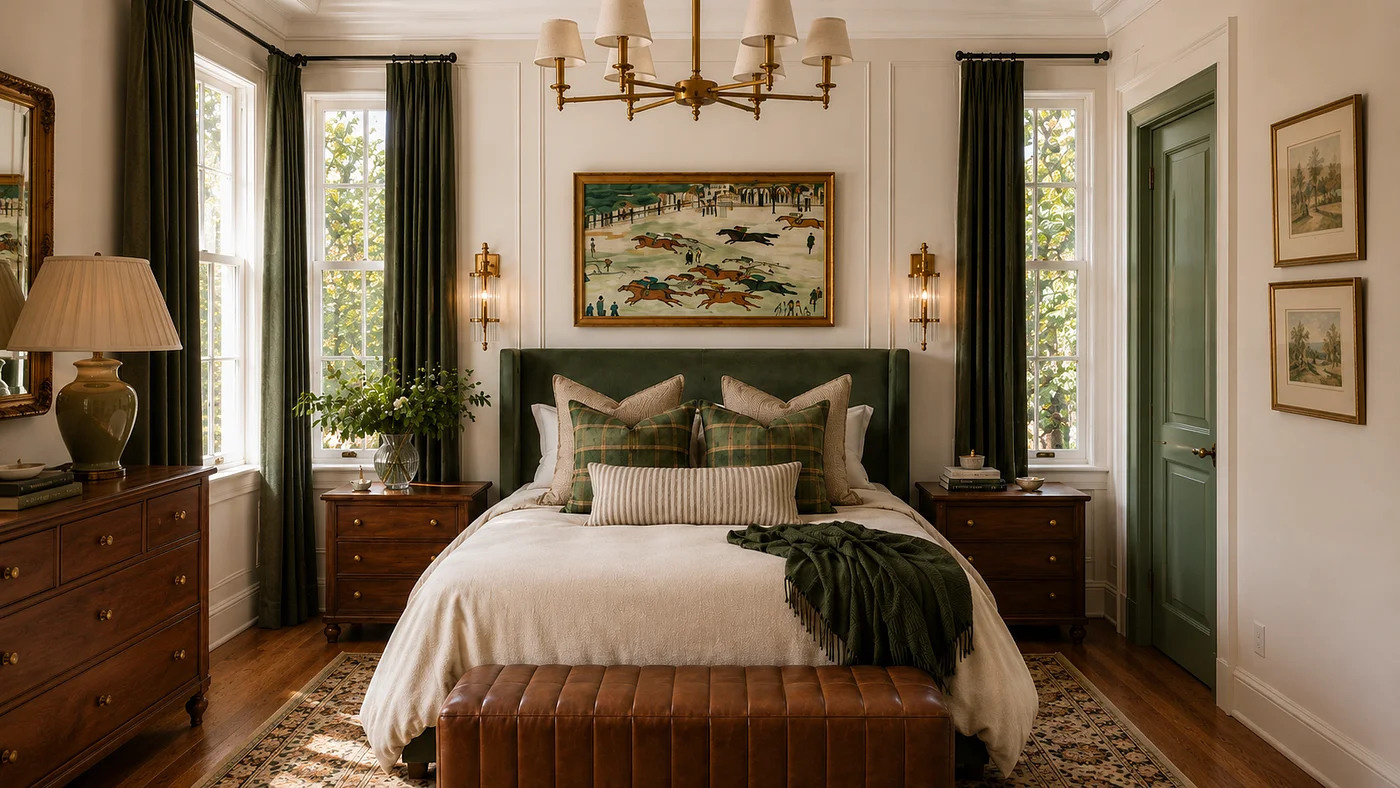
Discover Timeless Artwork for a Collected Home
Every collected home tells a different story.
Some begin with a favourite chair.
Others with a growing library, a handmade ceramic vase, or a table that has welcomed years of shared meals.
Very often, however, the story begins with a single piece of artwork.
A painting has the remarkable ability to shape the atmosphere of an entire room.
It introduces colour without overwhelming it.
It creates emotion without asking for attention.
It becomes a familiar presence—one that quietly accompanies everyday life and grows more meaningful with every passing season.
At House of Sun Editions, we believe artwork should do far more than fill an empty wall.
It should become part of the life of the home.
Our collections feature timeless gallery-wrapped canvas prints inspired by enduring subjects that never lose their relevance—botanical compositions, landscapes, floral arrangements, equestrian scenes, still lifes, and other classic works chosen for homes that value beauty, craftsmanship, and permanence.
Whether you’re creating your first collected corner or adding another chapter to a home you’ve been shaping for years, thoughtfully chosen artwork has the power to connect every element of a room into a story that feels entirely your own.
Because timeless homes are never built around trends.
They are built around pieces worth.